













When Vision Meets Velocity: Darren Heath on the Art & Craft of F1 Photography
One of Formula 1’s most influential visual storytellers, award-winning photographer Darren Heath (@artoff1) has been credited with redefining motorsports imagery through his artistic approach. We spoke to him about his philosophy and approach to photographing Formula 1 races, as well as his thoughts about the EOS R1, his current tool of choice.
The art of intent
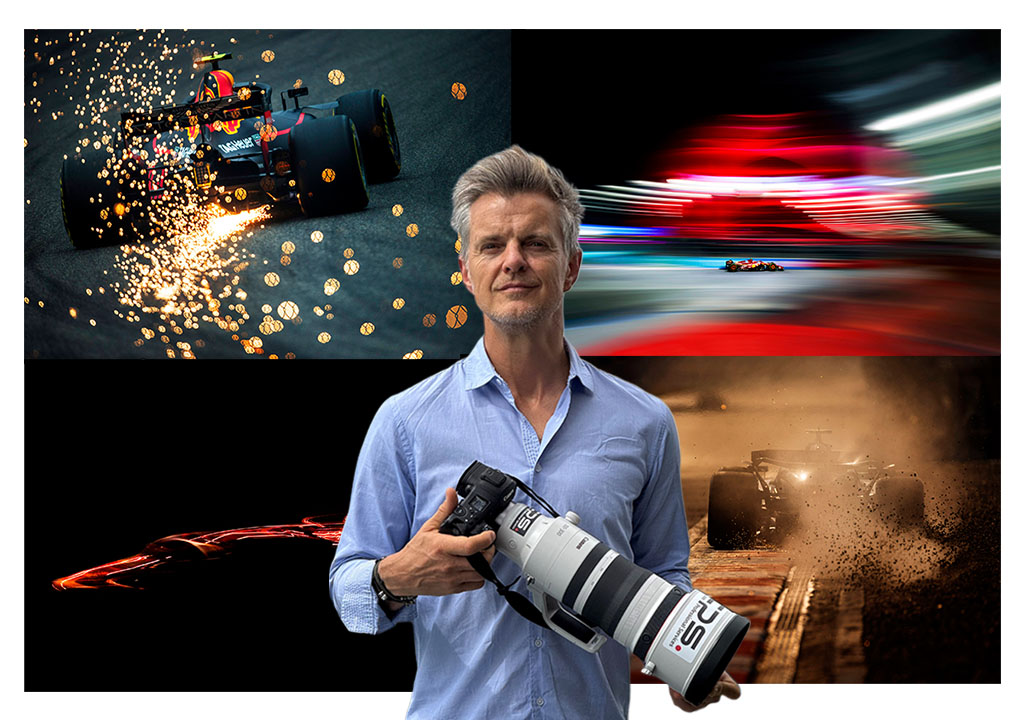
City lights transformed into brushstrokes of paint, smeared into streaks of colour like the view outside a speeding F1 car, juxtaposing stillness and motion in a way that evokes dizzying speed.
A fiery shower of titanium sparks as a car skims the asphalt: in one perfectly timed shot, they form a “crown”; in another, they become a shimmering stream of glittering golden orbs.
Yet another image transfers our attention to the other side of the circuit, where spectators fill the balconies of the multi-storied Panorama Building to watch the 2018 Monaco Grand Prix.
It is said that with Darren Heath’s images, you don’t just see Formula 1—you feel it. And that’s exactly what he intends for the viewer to see. “Whenever I photograph Formula 1, I’m trying to convey my emotions at the moment—the colours, the sounds, the feel of racing, the ethereal attack on the senses that Formula 1 is.”
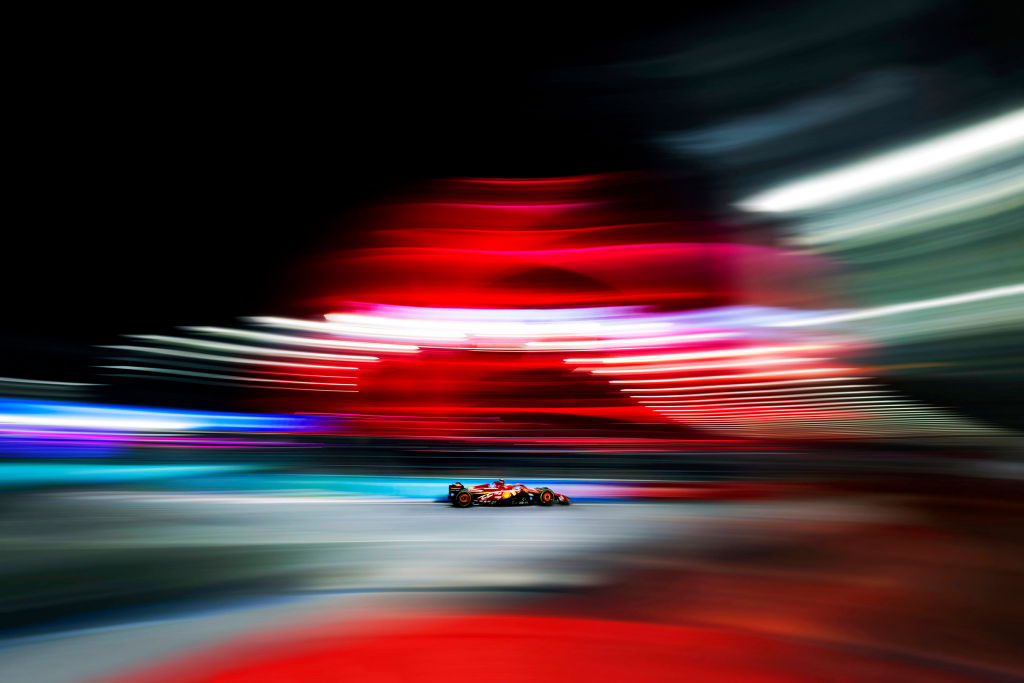
EOS R1 and EF11-24mm f/4L USM at 17mm + EF-EOS R Mount Adapter| 0.3 sec, f/22, ISO 160
2024 Las Vegas Grand Prix
“Knowing where to stand”
Intent, for Darren, usually takes shape in his mind’s eye long before he presses the shutter. And then he plans how to achieve it.
An Ansel Adams quote that features prominently on Darren’s website says, “A good photograph is knowing where to stand.”
It’s evidently a philosophy he believes strongly in, and this reflects in his pre-race “ritual”.
“Every Thursday before the race, I draw a freehand map of the track, where I mark, using dots and arrows, where I want to be at what time. I consider weather conditions, plan my shooting locations beforehand, and determine the most practical route.”
But how does one know where to stand?
It’s knowledge that must start from somewhere. For unfamiliar tracks, Darren uses an app to check the sun’s position and how it changes throughout the day. Walking around the track before the race, he also observes details that contribute to a photo: light angles and quality, backlight, potentially interesting foregrounds and shadows.
Over more than three decades of shooting races, such keen observations have helped Darren build an intimate familiarity with the various circuits. He knows vantage points, where lights and shadows are going to fall at different times of the day, what scenic elements can be incorporated, and the places to find stories when unexpected things happen.
Far from being stale, familiarity with places often gives rise to inspiration—new ideas to try next time. “Each visit to a familiar place is an opportunity to try something different.”
They can also be opportunities to improve. “I want to ensure I’ve got the best out of a shoot that I can, so I’ll reflect on my images and see what I could have done better.”
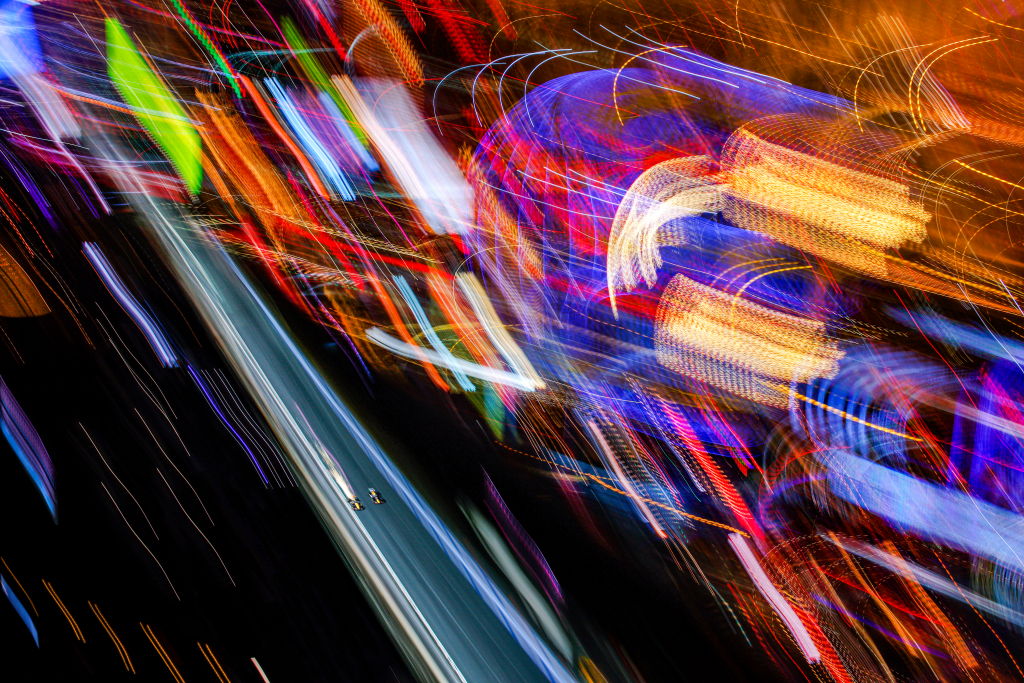
EOS R1 and EF50mm f/1.0L USM + EF-EOS R Mount Adapter
Multiple exposure from at least four exposures/ Main exposure: f/16, 1/5 sec, ISO 250
2024 Las Vegas Grand Prix
Darren often tries different techniques to create something different, like the image above of Lando Norris’s and Max Versatppen’s cars racing side by side on the Strip. Using the in-camera Multiple Exposure function, he moved the camera differently for each exposure, using his fingers to “mask out” light in specific areas to achieve the image he envisioned. The result: this masterpiece, which expresses the speed of Formula 1 and the lights and energy of Las Vegas with its multiple layers.
F1 is more than just the cars
Where do Darren’s ideas come from? All over—often outside of Formula 1 photography. He finds inspiration from his clients, his subjects, films and filmmakers such as cinematographer Roger Deakins, trends that people like, as well as the work of photographers of other genres.
It also helps to remember that the race is not just about cars. “Motorsports photography is so much about making coverage of race day a story,” Darren reminds us. “Turn around. Look at the spectators, the mechanics, the buildings, the food stalls, the details all around.”
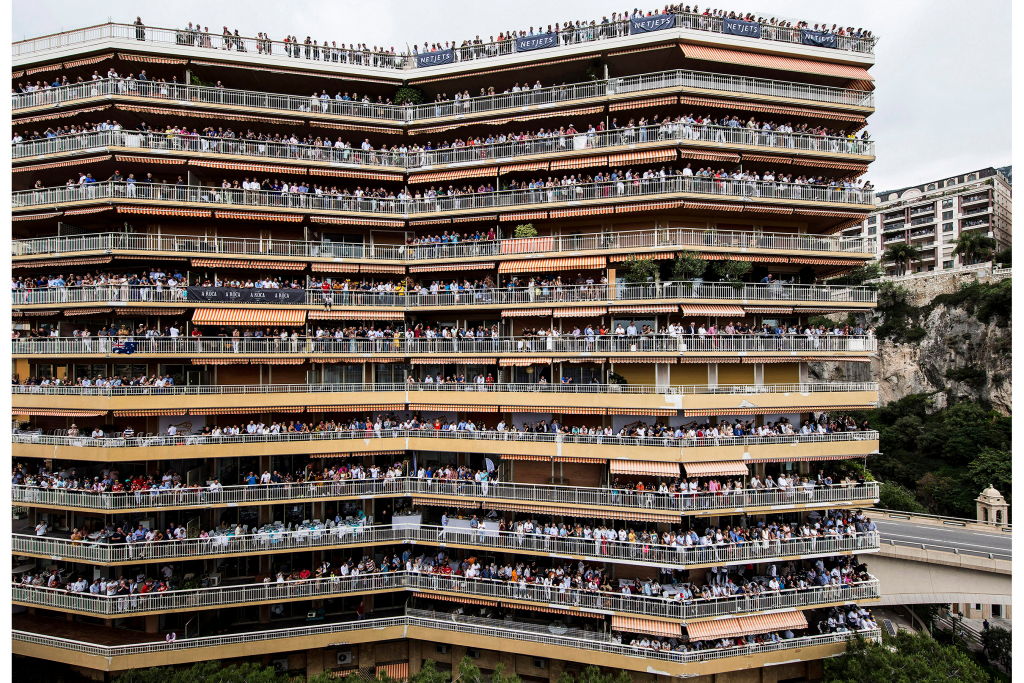
EOS-1D X and EF11-24mm f/4L USM at 15mm | f/8, 1/320 sec, ISO 320
2018 Monaco Grand Prix
Every year, spectators, including VIP guests, throng the balconies of the “Layer Cake” Panorama Building in Monaco to watch the Grand Prix. Darren had been fascinated with the building and was delighted to gain access to an excellent vantage point for capturing this scene. The Sainte-Dévote Chapel, an iconic landmark at the racetrack’s first corner, is visible on the right side of the image: he intentionally included it to show the context.
Gear talk: What lenses do Darren use?
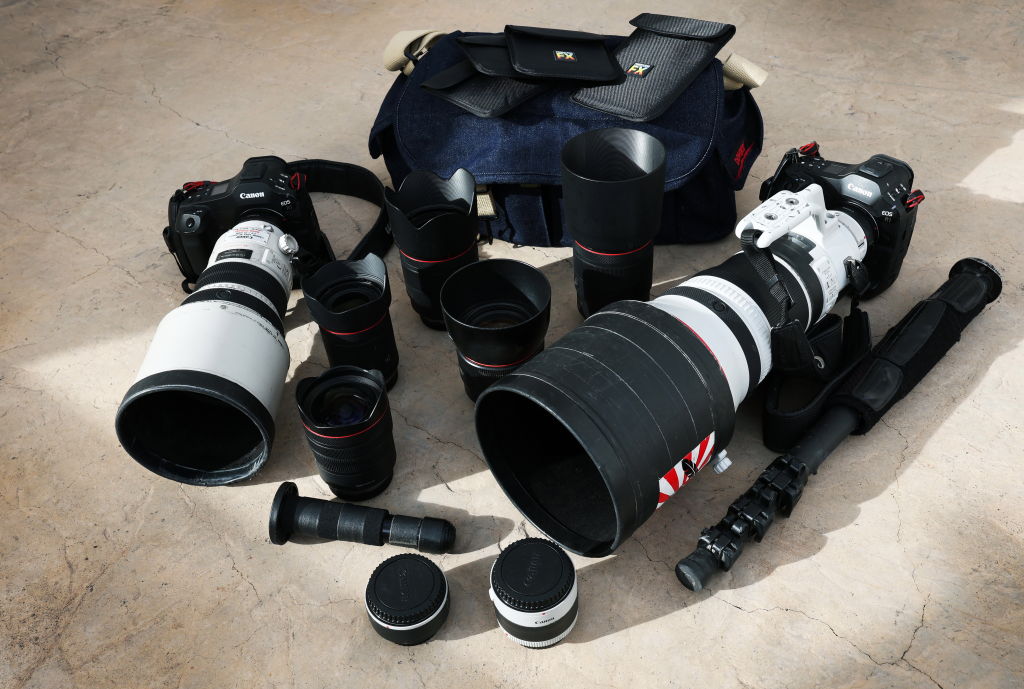
Darren's race day gear includes two EOS R1s, his lenses, and monopods and filters.
Darren’s current most frequently used lenses are:
- RF24mm f/1.4L VCM
- EF50mm f/1.0L USM
- RF50mm f/1.2L USM
- RF135mm f/1.8L USM
- EF200mm f/2L IS USM
- EF400mm f/2.8L IS III USM
- RF10-20mm f/4L IS STM
His preference for prime lenses stands out in a world where most motorsports photographers now use mostly zoom lenses. It’s not an issue of optical quality. “I feel using prime lenses cuts down on the decisions I must make, so I move more intuitively. I like how it also instils a kind of discipline, where you work with what you have.”
One thing he considers when deciding which lenses to bring to the circuit is that particular circuit's characteristics. “For street circuits like Monaco, I would bring a wider lens like the RF10-20mm f/4L IS STM to capture the cars against the scenery.”
The craft of photography
Formula 1 photographers must shoot almost reflexively; skill and technique honed into instinct. Darren remembers the hours he spent at the start of his motorsports photography journey, practicing until he could reliably capture the big, sharp close-ups of cars that he envisioned with the Canon New F-1 and his first super telephoto lens, the FD500mm f/4.5. He shot cars passing his bedroom window to practice his panning technique.
But technical mastery demands more than just that. Through keen observation, experience, and of course, a lot more practice, Darren gained familiarity with track sections, individual drivers’ racing styles, car dynamics, and the myriad other factors that affect a panning shot—as well a feel for how he wanted to interpret the speed.
Learning and practising is an ongoing process, whether it’s to master new techniques or unleash the full potential of a new tool. With his relatively recent switch to the EOS R1, Darren’s learning continues.
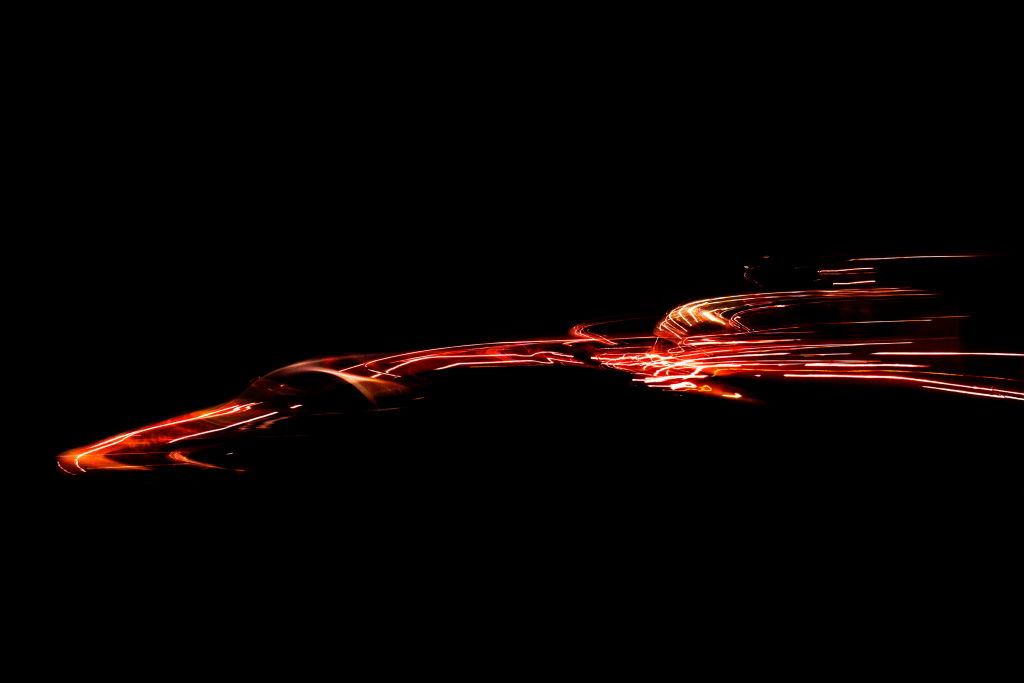
EOS-1D X and EF100mm f/2.8L Macro IS USM at f/32, 1/5 seconds, ISO 250
2015 Singapore Grand Prix
Like he usually does, Darren saw in his mind’s eye the image he wanted: a car resembling a rocket ship speeding through space. He knew the conditions he needed: no skyscrapers, a lot of top light, and no other light sources in the front or bottom. He found the perfect place near the exit of Turn 3 at the Marina Bay Circuit, and then concentrated on the flow. After a bit of post-processing to adjust the contrast and remove some remaining shadow detail, the image was complete.
Panning tips from Darren:
- Aim for when the car is accelerating or at a constant speed
It’s harder to get a nice panning shot when the car is braking, especially with the incredibly short braking distances in Formula 1.
- Inside corners are easier for panning than outside corners
At inside corners, the car’s relative movement across your frame is smoother and more predictable, making it easier to maintain focus and composition.
EOS R1: The camera that turns vision into reality
In the world of F1, where milliseconds define both races and photographs, a photographer’s camera must be an extension of their eye and reflexes.
Canon’s flagship “1” series cameras have been Darren’s tool of choice since the beginning when, as a teenager determined to embark on motorsports photography career, he bought the New F-1 to use the same gear he saw so many professional motorsports photographers using. He fell in love with the ergonomics, ease of use, and performance. Decades and many “1” series cameras later, he now shoots with the latest in that lineage: the EOS R1.
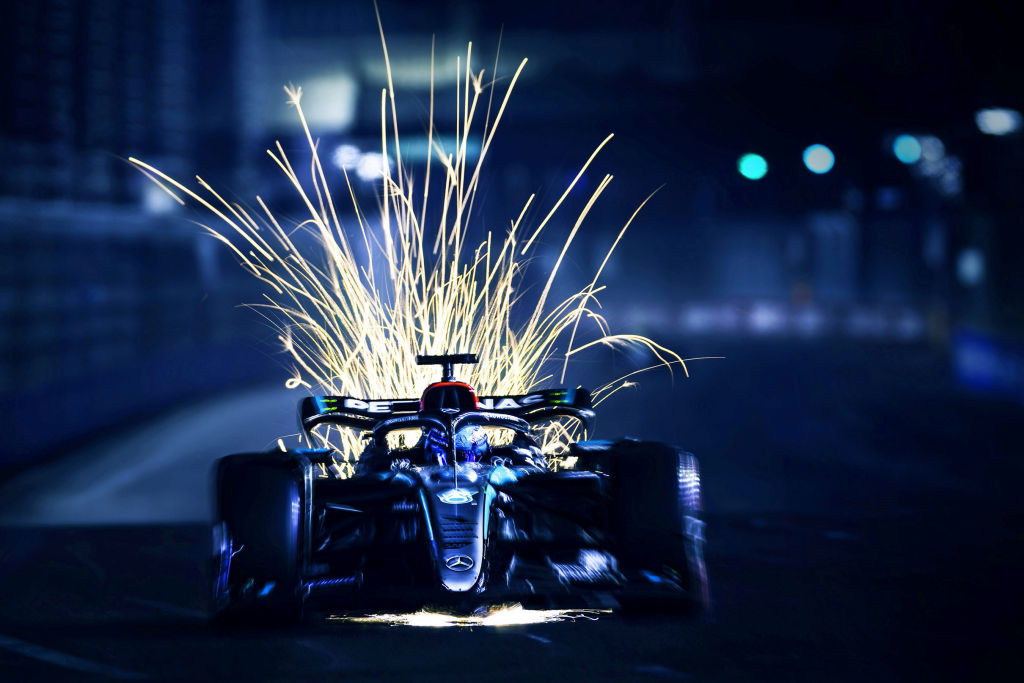
EOS R1 and EF400mm f/2.8L IS III USM+ Extender EF2x III + EF-EOS R Mount Adapter at 800mm, 1/10 sec., f/7.1, ISO 50
2024 Las Vegas Grand Prix
Titanium sparks shoot from George Russell’s Mercedes as he claims pole position at the Las Vegas Strip Circuit. “It’s a situation I never would have shot with autofocus on a DSLR”, Darren tells us, due to the speed of the cars coming down the Strip—F1’s longest straight section—and the high propensity for overtaking. The EOS R1’s Servo AF mode locked firmly on the car, making it possible to capture the shot without compromising composition—and with a beautiful crown of sparks to top it off.
Bridging vision and execution--faster
Switching to the EOS R1 was a carefully considered decision. Before that, Darren had been using his pair of EOS-1D X DSLR cameras for over 10 years! While he had been contemplating Canon’s new EOS R mirrorless system, he wanted to wait for the top-of-the-line camera and see what it had to offer before deciding.
As he heard more about the EOS R1 from friends and colleagues who used it, he became more convinced about its ability to elevate his image-making. Speed and AF performance aside, the quality of the files he saw from the EOS R1 bowled him over. “The sensor, the noise performance, the colour definition, the rendering—they were amazing.”
Darren made the plunge before the 2024 Las Vegas Grand Prix, replacing both his EOS-1D X cameras with EOS R1s for smoother camera switching on the field. He was soon wowed by the camera’s Dual Pixel CMOS AF II autofocus and subject tracking system, which helped him capture compositions that would previously have been practically impossible.
Other favourite features include the pre-shooting function; the Vari-angle LCD screen, which he can flip out and rotate to shoot with the camera on the floor, and the camera’s tremendous customisability, which allows him to set shortcuts for more responsive shooting.
“My hit rate is higher: I get the shots I envision faster. This reduces the number of frames of a given situation that I need to shoot, improving all-around efficiency.”
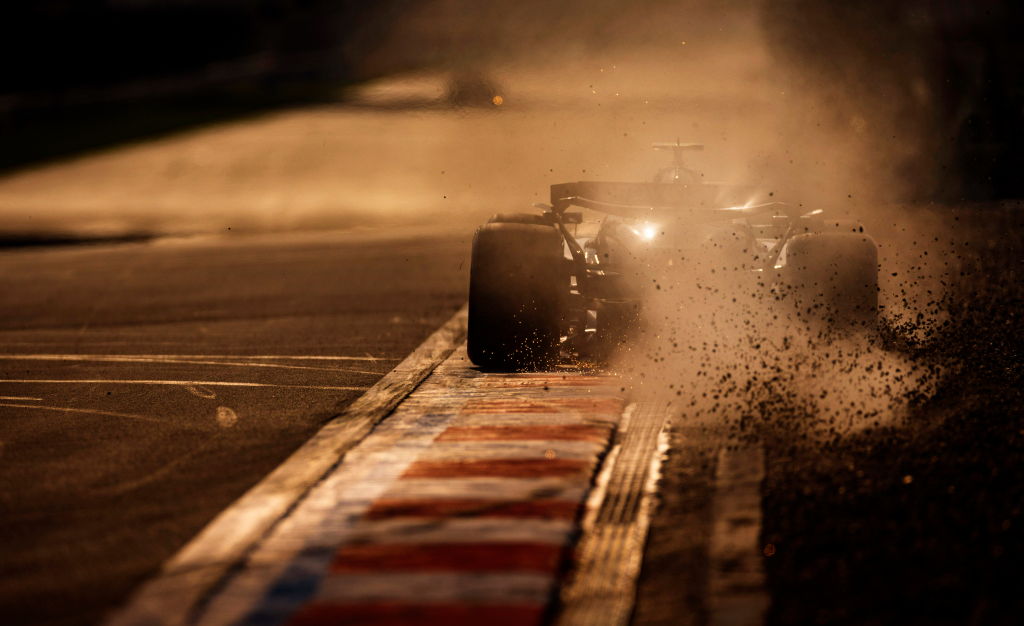
EOS R1 and EF400mm f/2.8L IS III USM with the Extender EF1.4x III at 560mm + + EF-EOS R Mount Adapter | f/4, 1/16000 sec, ISO 400
2025 Chinese Grand Prix
Kimi Antonelli’s Mercedes car kicks up gravel on the Shanghai International Circuit. Darren was impressed by how EOS R1’s vehicle detection locked onto and tracked the car despite the high speed and low contrast.
Full of tremendous potential—once you take the effort to learn it
The EOS R1’s high customisability and familiar menus make it easy to set up and operate like his old EOS-1D X. But with over ten years of technological evolution between the two, Darren admits that unlocking the EOS R1’s full potential involves a steep learning curve—one he’s still navigating with wonder and curiosity. Each day behind the camera reveals new tools, shortcuts, and possibilities that refine the way he works.
“Just the other day, I learned that I could limit the number of shots that are captured during pre-shooting, which helps my workflow tremendously.” He also notes that Panning Assist more consistently for straight line panning and less so for off-axis panning, although he very much prefers full, hands-on panning control.
There’s much he has yet to discover: he looks forward to trying out features like Eye Control AF in the off-peak season, where there’s more room for trial and error.
“The feeling I get is that the EOS R1 holds tremendous game-changing possibilities, especially if you take the time to learn the camera.”
Darren’s shortcut setup
Here’s a look at some of Darren’s current button customisations, optimised for easy access to his most frequently used functions. What kind of customisations do you make?
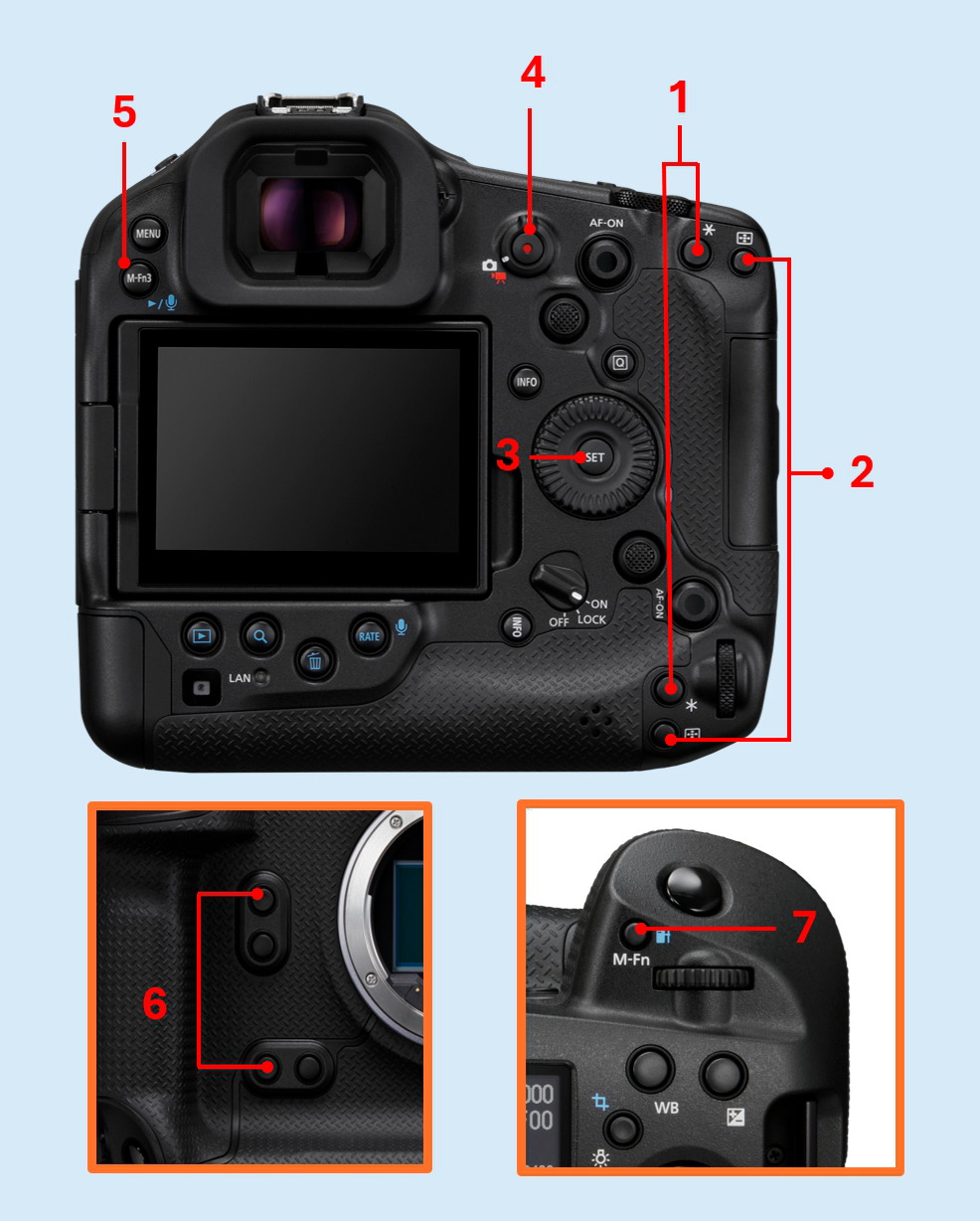
| Button name (Original function) |
Darren’s setting | |
| 1 | AE Lock button (Locks autoexposure) | Set ISO speed (hold button, turn main dial) |
| 2 | AF point selection button(Direct AF point selection) | Direct AF area selection |
| 3 | Set button (Enables eye control) | One Shot AF/Servo AF switching |
| 4 | Movie shooting button (Starts video recording) | Set ISO speed |
| 5 | Multi-function 3/ voice memo playback (hold to record) button (Cropping/Aspect ratio) |
(Disabled) |
| 6 | Multi-function button 2 (Start/stop whole area AF tracking) |
Direct AF point selection |
| 7 | Multi-function/FTP server image transfer button (Dial Function) |
One Shot AF/Servo AF switching |
About the Author
Celebrated for his distinctive, artistic approach to F1 imagery, Darren Heath has covered hundreds of Grands Prixs throughout a career spanning several decades, earning recognition for transforming high-speed racing into striking visual art through bold colour, composition, and a keen eye for storytelling. Heath has worked with leading teams, sponsors, and publications worldwide, and his photographs—often noted for revealing unseen details and atmosphere—have helped shape the modern visual language of F1.