

















EOS R6 Mark III: The Power to Unleash Your Passion
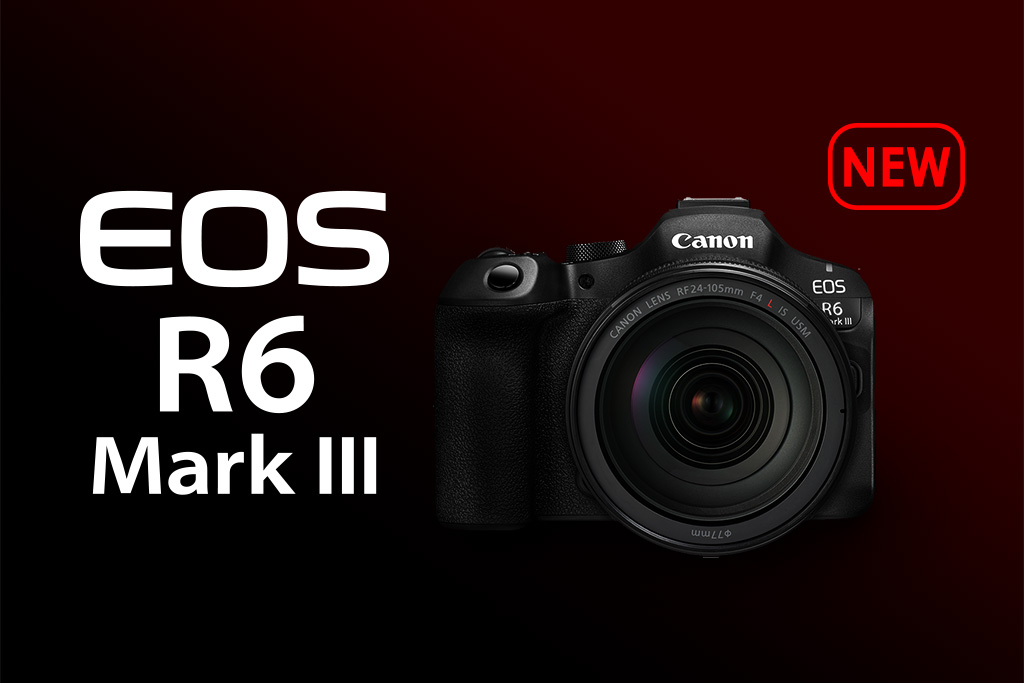
On 6 November 2025, Canon announced the EOS R6 Mark III. Power-packed with a higher resolution 32.5-megapixel full-frame CMOS sensor, improved AF and still shooting performance, and advanced video capabilities reminiscent of the Cinema EOS C50 such as 7K 60p RAW and 7K 30p Open Gate shooting, the latest camera in Canon’s “6” series is set to empower photographers and hybrid creators in pursuit of their passion—especially if it involves shooting challenging subjects.
Elevate your stills and videos
Some say that gear doesn’t matter, but of course it does. Gear that makes more possible empowers you to freely unleash your creativity.
From the EOS R6 that introduced deep learning-based autofocusing and In-Body IS to the EOS R6 Mark II with its rich video features and blazing fast speed, the EOS R6 series cameras have always been overachievers that bring Canon’s advanced features within reach. The EOS R6 Mark III is no exception, delivering unmatched speed and resolution. It equips you to tell stories as desired—even in challenging situations.
1. Stunning 32.5-megapixel resolution
Greater detail, greater realism
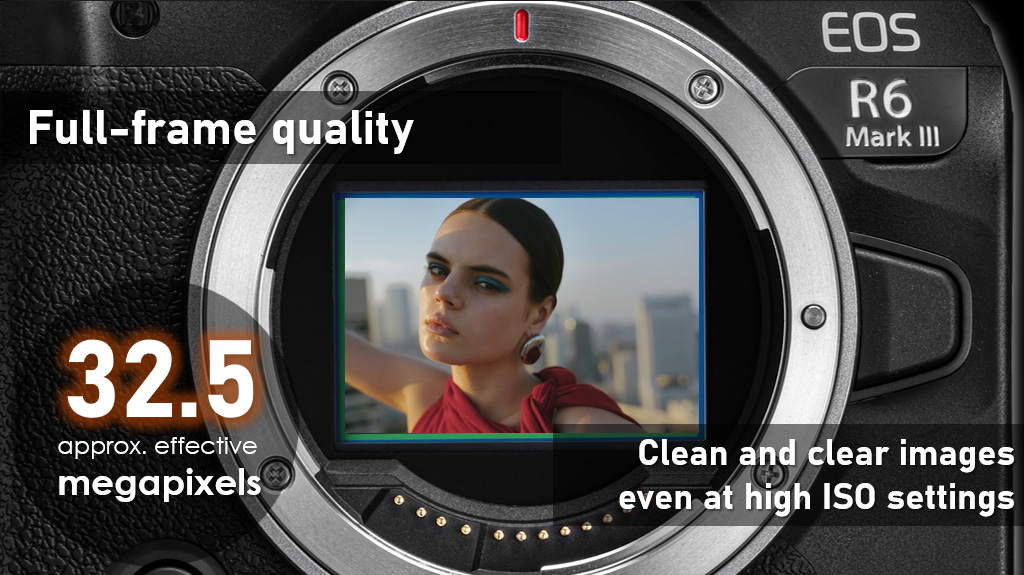
With more megapixels on its full-frame sensor, the EOS R6 Mark III delivers crisper edges, smoother tonal gradation, and finer rendering of nuances like the textures in clouds and intricate textile details. The result: greater realism that draws your viewer into the scene.
Know this: Enough for high-quality A2 prints
The EOS R6 Mark III captures approximately 6960 x 4640-pixel images, enough to print in A2 format (420 x 594mm) at 290 dpi. That’s essentially indistinguishable from 300 dpi, and enough for well-shot images to look tack sharp with no visible pixelation.

EOS R6 Mark III/ RF24-70mm f/2.8L IS USM/ FL: 35mm/ Manual exposure (f/2.8, 1/25 sec)/ ISO 200
Crop more while maintaining quality

EOS R6 Mark III/ RF70-200mm f/2.8L IS USM/ FL: 200mm/ Manual exposure (f/2.8, 1/250 sec)/ ISO 100

Cropped from the above image
The EOS R6 Mark III’s higher megapixel count compared to its predecessor means you can crop closer before the image resolution deteriorates. Great for unexpected photo opportunities outside the reach of your current lens, and for exploring the art of cropping!
More immersive 180-degree VR
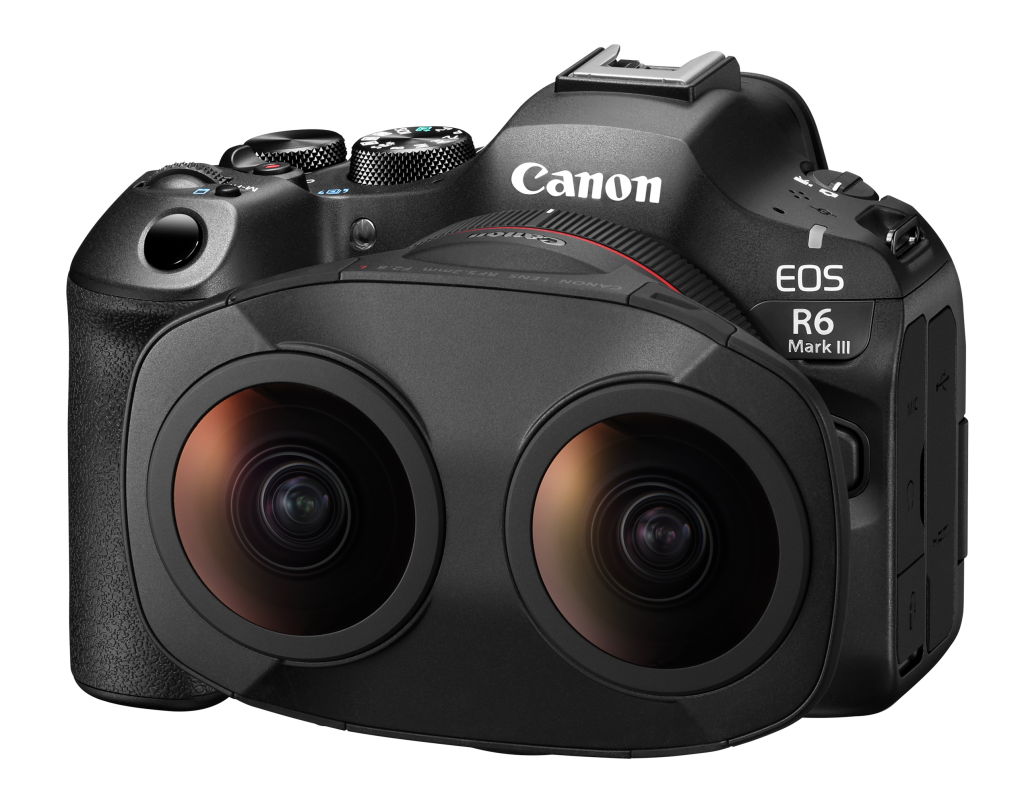
When used with the RF5.2mm f/2.8L Dual Fisheye, the EOS R6 Mark III’s 32.5-megapixel resolution enhance the immersive realism of 180-degree VR videos and stills, taking “lifelike” to a new level. The lens enables a streamlined VR setup and workflow with just one lens and camera.
2. Enhanced high-speed continuous shooting performance
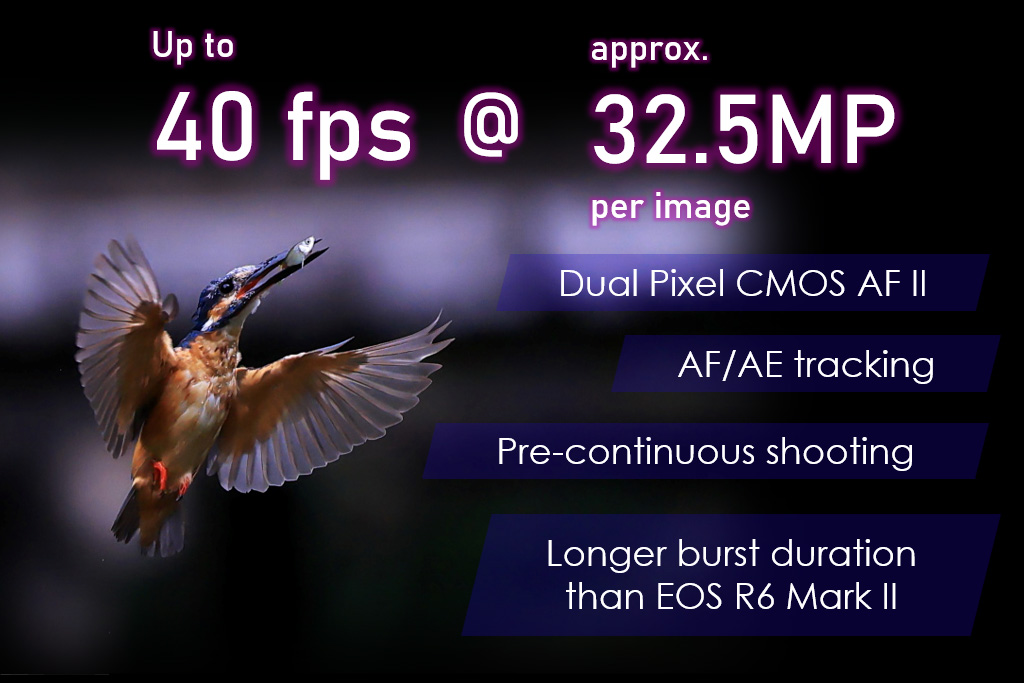
Despite its higher megapixel count, the EOS R6 Mark III still shoots up to 40 fps (electronic shutter) or 12 fps (mechanical/first-curtain shutter) with full AF/AE tracking, enabled by the sensor’s faster readout and DIGIC X’s processing power.
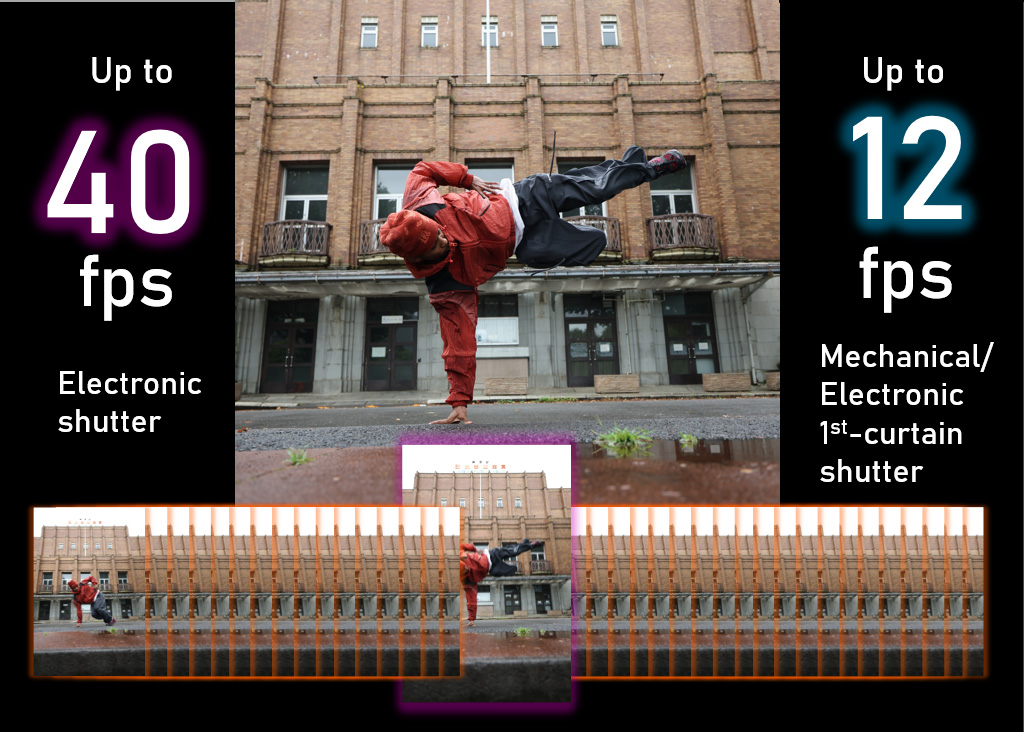
From wildlife to sports, the EOS R6 Mark III offers swift, tenacious subject tracking performance, keeping the focus where you want it.
Shooting in the electronic shutter mode offers the option of a silent shutter for scenes where quiet operation matters.
Shoot longer burst sequences
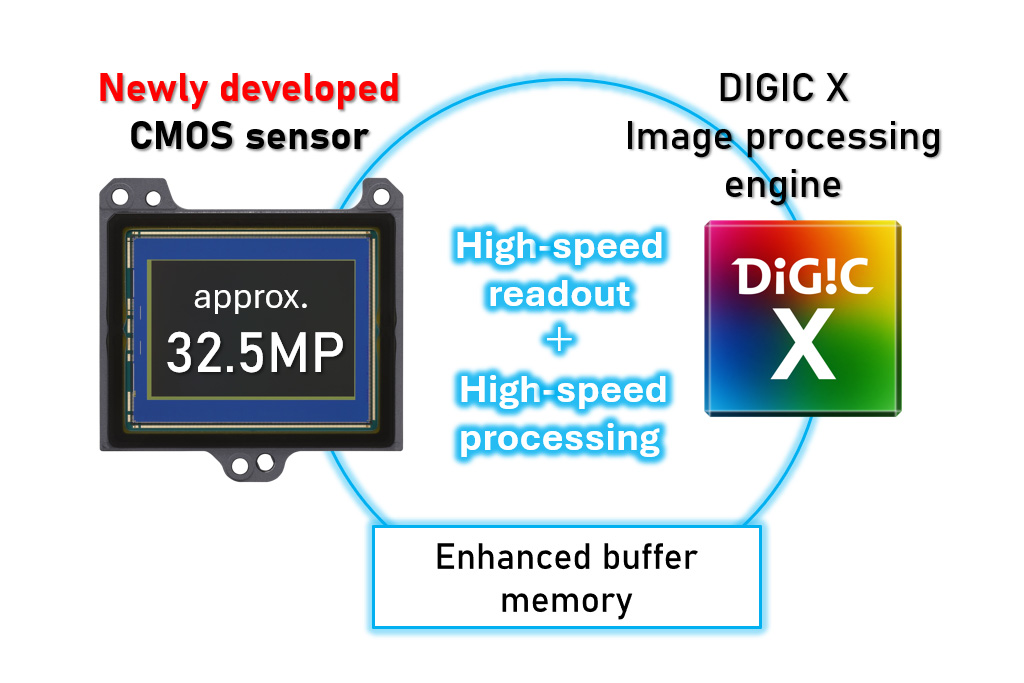
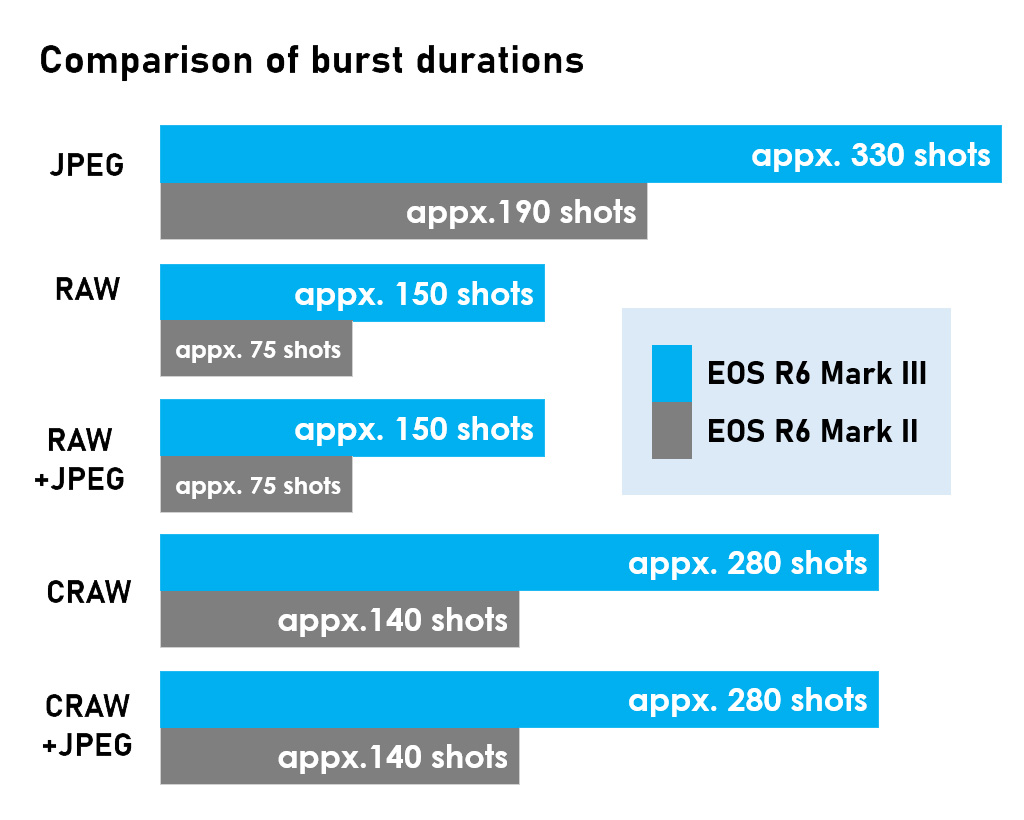
The EOS R6 Mark III’s enhanced processing boosts buffer capacity, allowing longer high-speed bursts—up to 280 CRAW or 150 RAW shots at 40 fps in H+ mode, roughly twice the EOS R6 Mark II’s performance and ideal for extended action sequences.
Pre-continuous shooting: Your aid for anticipating the moment
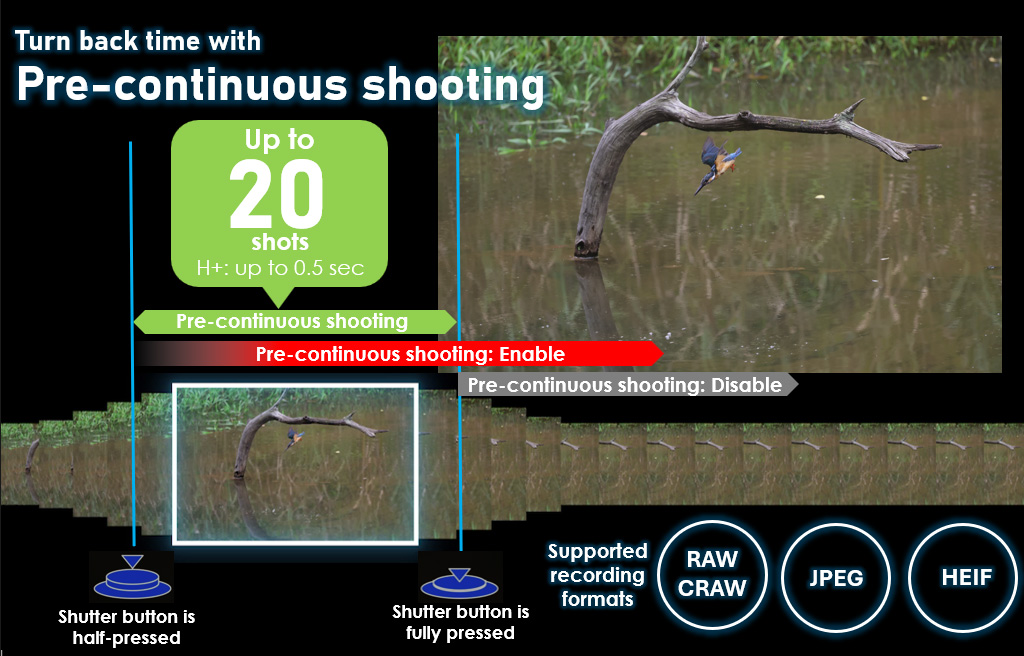
The EOS R6 Mark III inherits the EOS R1/ R5 Mark II’s new pre-continuous shooting feature, which captures continuous full-resolution still photos from up to 0.5 seconds (up to 20 frames) from the time you half-press the shutter button. This increases your chances of capturing unpredictable moments.
Available in High-speed Continuous Shooting + (H+) mode, the feature is more flexible than the RAW Burst and pre-shooting mode found on previous cameras. All autofocus functions are available, and you can use it in any still recording format: RAW/RAW, JPEG, or HEIF. Each frame is recorded separately like any other image, allowing easy review and editing.
CFexpress Type B + SD card slots for faster workflow efficiency
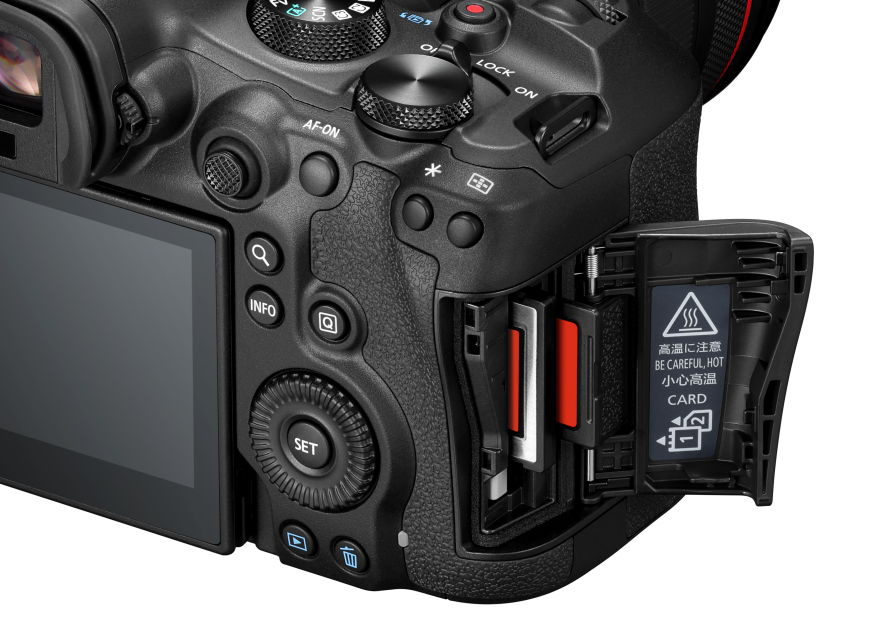
The EOS R6 Mark III features both CFexpress Type B and SD card slots, supporting the high write speeds needed for internal 7K RAW recording and 40 fps full-resolution still bursts. This also enables main/proxy or main/sub video recording for more efficient video post-production.
3. Smarter, more reliable autofocus during both stills and videos
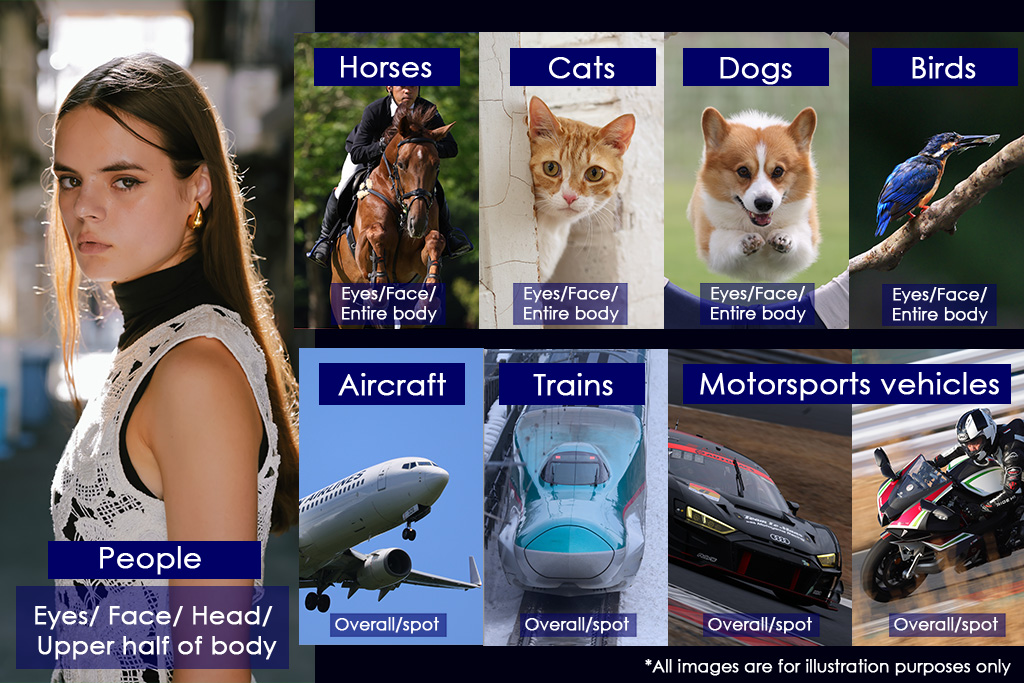
Equipped with deep learning-based Dual Pixel CMOS AF II system, the EOS R6 Mark III shares the same “grab and track” AF capability as all recent EOS R series cameras. This allows it to lock onto and track a detected subject from any AF area setting, including the high-precision 1-point and Spot AF modes often used for smaller subjects or complex scenes. It tracks subjects more tenaciously than its predecessor thanks to an enhanced AF algorithm.
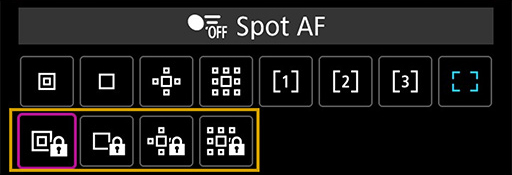
Better control over AF behaviour
Like the EOS R1/ R5 Mark II, the EOS R6 Mark III adds four AF modes with whole-area tracking disabled (lock icon), preventing accidental subject detection amid obstacles or bystanders.
Register People Priority: Automatically finds and tracks specific people
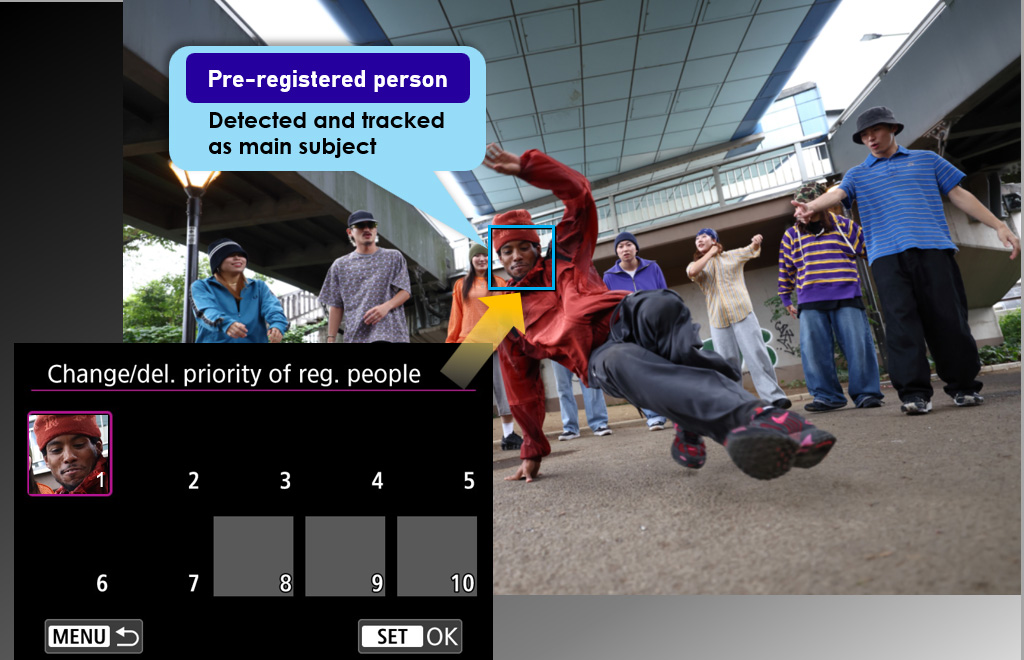
The EOS R6 Mark III is the first “6” series camera to feature the Register People Priority mode, which it inherits from more advanced cameras like the EOS R1/ R5 Mark II. The mode automatically prioritises detection and tracking of a preregistered person when shooting photos/videos with multiple people in the frame—great for concerts, events, or group photography situations. You can pre-register up to 10 people either by photographing them or loading an image from a memory card.
4. Videos with smoother focus transitions
These enhancements to Movie Servo AF help users shooting without a focus puller achieve smoother, natural-looking focus transitions when using AF.
Smooth AF in line with Cinema EOS cameras
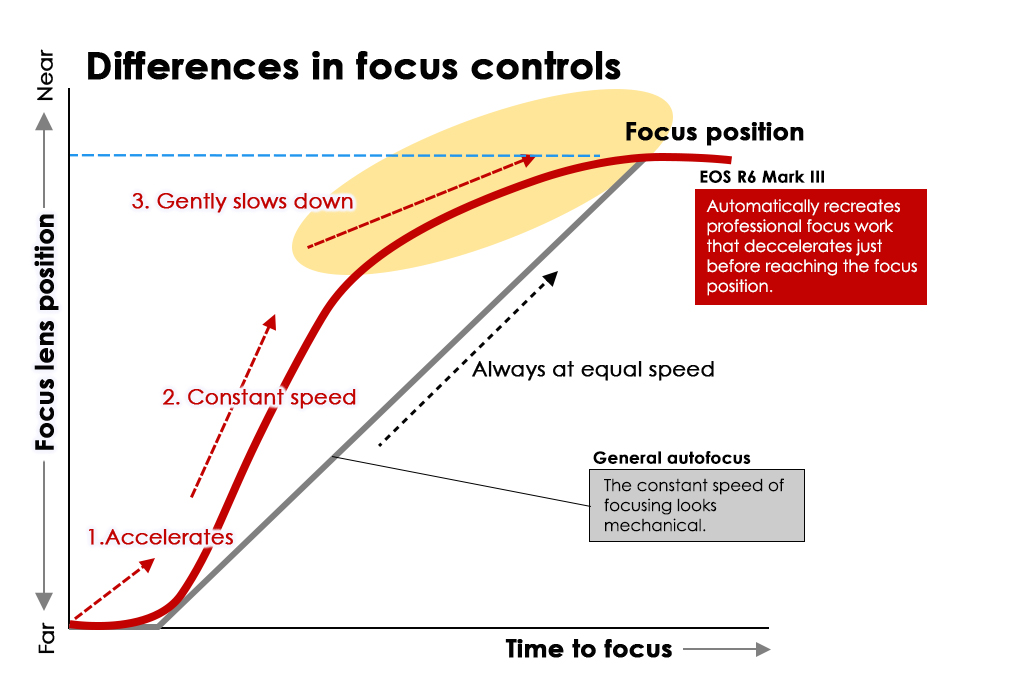
No more mechanical-looking focus transitions: the focusing acceleration/deceleration algorithm inherited from the EOS C400/C80 cinema cameras recreates the deliberate focus control of focus pullers.
Enhanced Movie Servo AF: Resume subject tracking after manual focusing
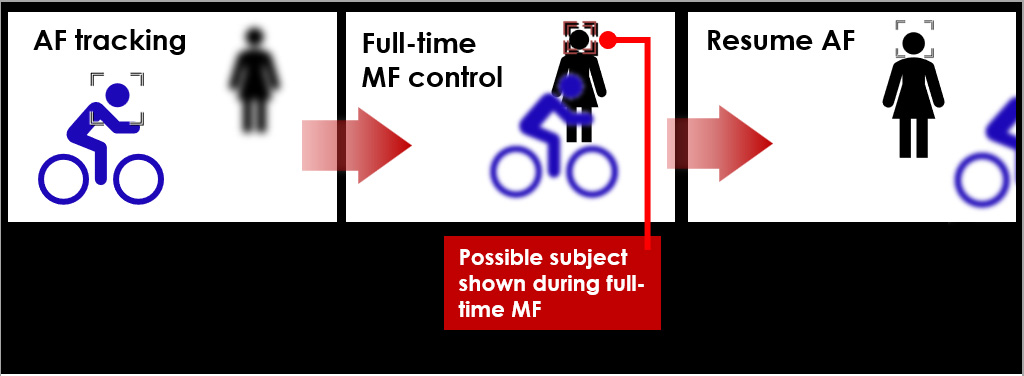
In video mode, when Movie Servo AF is enabled, the EOS R6 Mark III can automatically resume AF tracking on a new subject after the user changes focus to it manually through full-time manual focus control. This allows you to switch the main subject by operating only the focus ring*. It is best combined with the Subject to Detect and Eye Detection AF settings**.
* Compatible lenses: RF lenses with Electronic full-time MF, RF lenses compatible with electronic manual focusing (only when Movie servo AF is paused; excluding RF5.2mm f/2.8L Dual Fisheye).
** Subject selection and tracking of selected subject may not be possible if the subject is moving, not in focus on the screen, or has no depth difference.
5. Enhanced image stabilisation
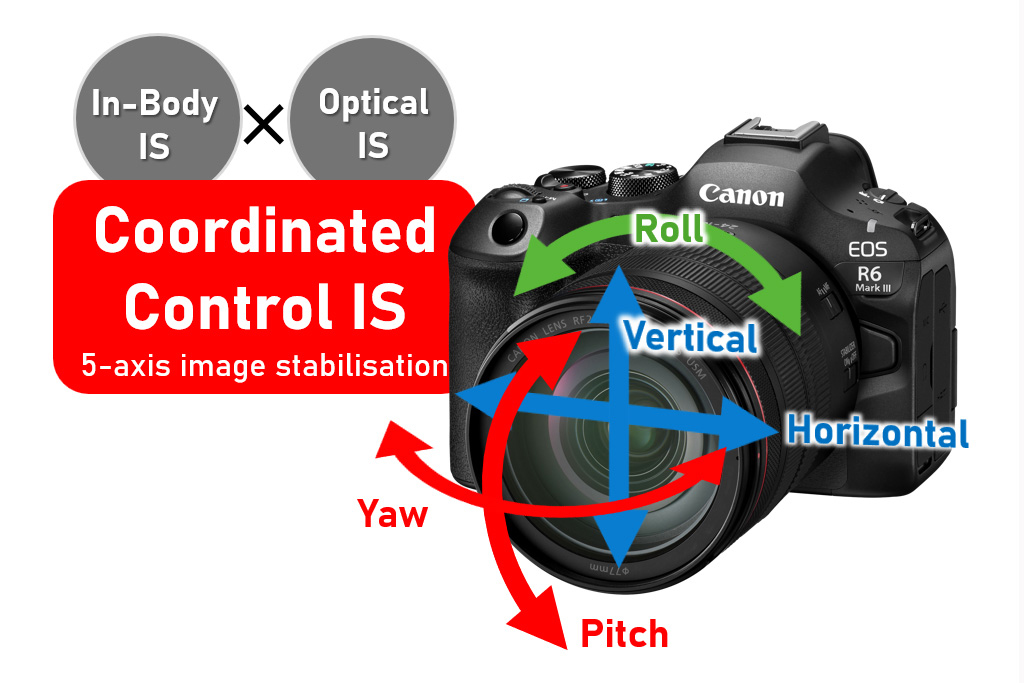
The EOS R6 Mark III’s sensor-based in-body image stabilisation system (In-Body IS) performs 5-axis image stabilisation on photos and videos even on lenses not equipped with in-lens optical image stabilisation (Optical IS).
When using a compatible RF lens with Optical IS, the camera body and lens IS systems work together to perform Coordinated Control IS. During still shooting, this achieves enhanced stabilisation effects up to 8.5 stops at the centre and 7.5 stops at the image edges*. The edge blurring that tends to occur with wide-angle lenses is corrected through peripheral coordinated control with compatible lenses.
Handheld videos shot on the move can be further stabilised through the combination of Coordinated Control IS and Movie Digital IS.

EOS R6 Mark III/ RF24-105mm f/2.8L IS USM Z/ FL: 105mm/ Manual exposure (f/3.2, 1 sec)/ ISO 100
Watch: Enhanced Movie Digital IS
Subject tracking IS: Stay in the picture while filming walk-and-talk videos
Create steady walk-and-talk vlogs without unwanted cropping: the EOS R6 Mark III is the first interchangeable-lens camera with Subject Tracking IS, which keeps subjects properly framed during stabilisation.
* Compliant with CIPA 2024 standards; Yaw/Pitch/Roll correction performance when using electronic shutter and RF24-105mm F2.8 L IS USM Z (f=105mm)
6. Unprecedented video flexibility: Up to 7K Open Gate internal RAW recording
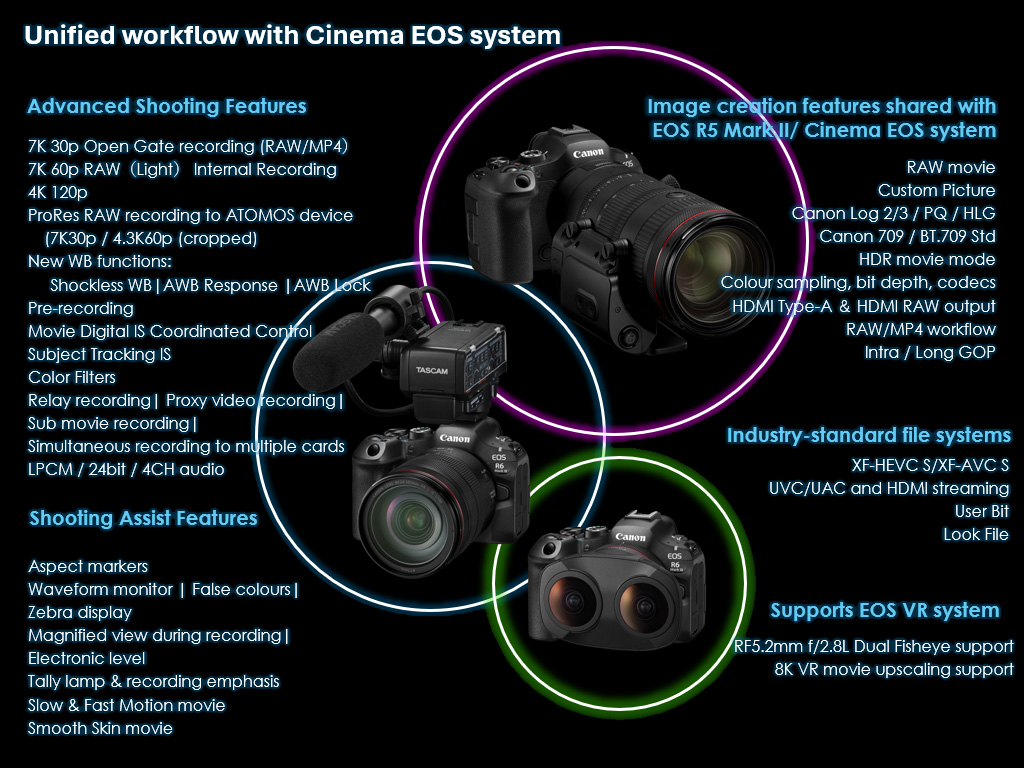
The EOS R6 Mark III’s 32.5-megapixel resolution supports 7K 60p RAW internal video recording to its CFexpress Type B card slot, as well as recording in the cinema standard DCI (17:9) aspect ratio. Frame rates of up to 60 fps (NTSC)/ 50 fps (PAL) enable smoother action, while RAW video capture provides more latitude for post-production workflows involving detail recovery, VFX, and heavy image manipulation.
Uncropped 17:9 aspect HDMI/ ProRes RAW external recording is supported up to 7K 30p via the camera’s HDMI Type-A (full-sized) output terminal. 2K DCI MP4 proxy files can be recorded simultaneously to the SD card for a more efficient editing workflow.
7K 30p Open Gate RAW recording: Same footage, more possibilities
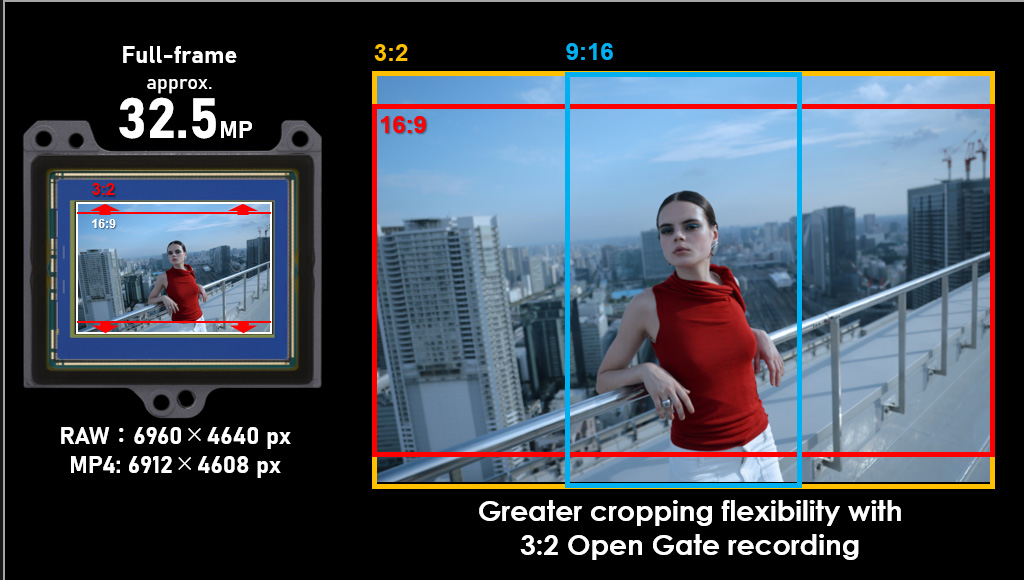
The EOS R6 Mark III is also the first EOS R-series camera to feature 7K Open Gate RAW/MP4 recording up to 30p. This mode uses the entire sensor height during recording, giving more flexibility to crop or recompose footage in post-production. It is especially useful for creating social media-friendly 9:16 and normal 16:9 files from the same footage, so you don’t have to set up multiple devices. Display up to two aspect markers at the same time to get a clearer idea of how your final videos will look.
7K Open Gate RAW files are 6960 x 4640 pixels, while 7K Open Gate MP4 files are 6912 x 4608 pixels.
Differences between 7K Open Gate and normal 7K RAW
| 7K Open Gate (3:2) | 7K 60p RAW (17:9) | |
| Aspect ratio | 3:2 | 17:9 |
| Maximum frame rate | 30p | 60p |
| Resolution | RAW: 6960 x 4640 MP4: 6912 x 4608 |
RAW: 6960 x 3672 |
| Recording format supported | RAW, MP4 | RAW only |
| Proxy/sub-file recording | When the main file is RAW: FHD proxy in XF-AVC S Sub-recording not possible for MP4 main file recording |
2K DCI XF-AVC S proxy or 4K DCI Fine XF-HEVC S/ XF-AVC S sub files |
Recording formats supported on the EOS R6 Mark III
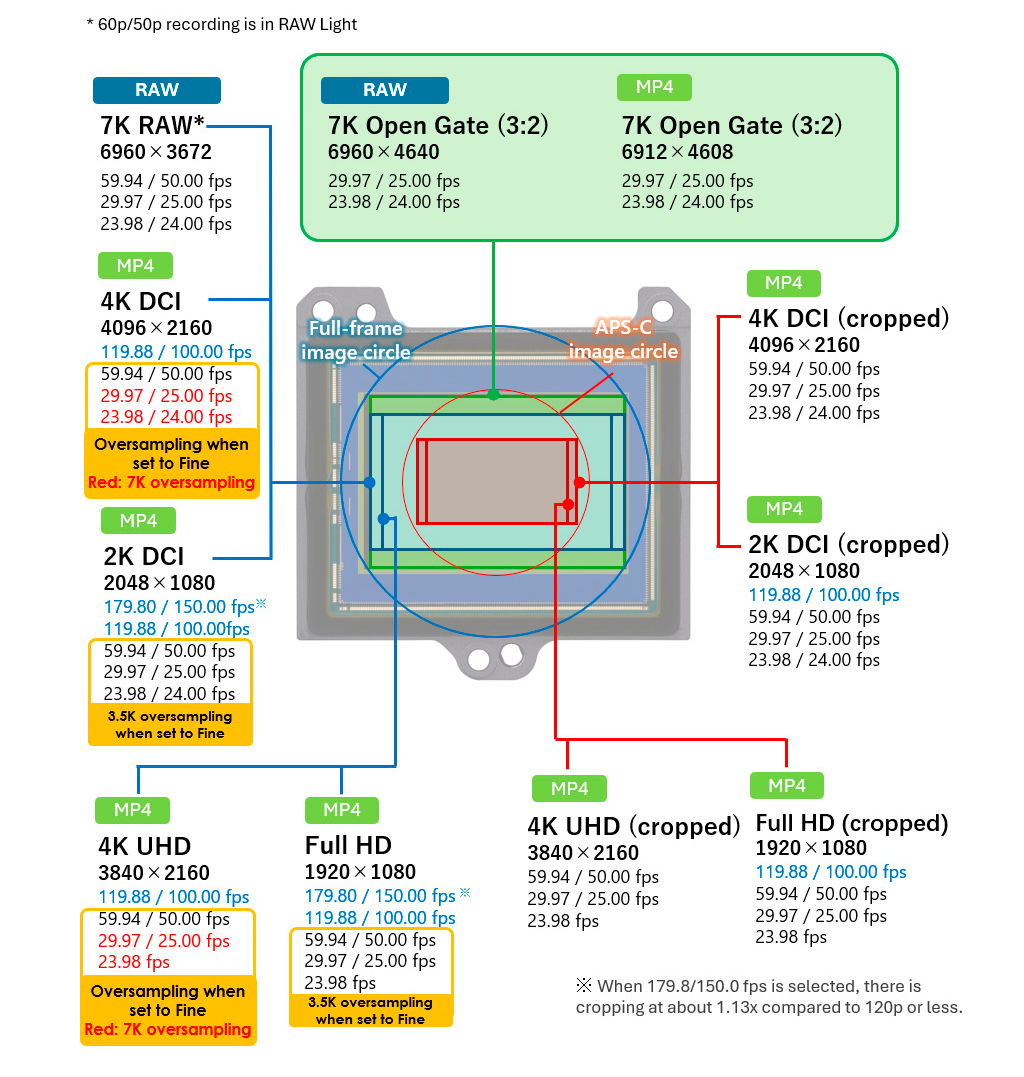
The EOS R6 Mark III supports up to 11 different recording resolutions at various frame rates—ample choice for different project needs. This includes:
- 7K-oversampled 4K 30p video: For enhanced resolution and reduced artifacts
- High frame rate video up to 4K 120p and Full HD/2K DCI 180p: Can be used to create smoother slow motion video up to 5x slower in 4K, and 7.5x slower in 2K or Full HD.
Pro tip: Record high frame rate videos in their original frame rate for easier speed ramping in post-production, or use the new Slow & Fast Motion Movie mode to achieve ready-to-use slow/fast motion clips! The mode also supports up to 60x fast-motion recording, ideal for speeding up time in slow-paced scenes.
Watch: Ultra slow motion from 4K 120p
A high frame rate gives you smoother slow-motion video—like the example above, shot at 4K 120p and edited in post-production to achieve the dramatic slow-down effect.
7. Support for different colour and editing workflows
Supports both Canon Log 2 and Log 3
The EOS R6 Mark III adds Canon Log 2 to Canon Log 3, expanding Log recording options for colour grading.
Canon Log 2: Enables a wide dynamic range of 15+ stops and preserves more details in dark areas, giving more room for exposure adjustments.
Canon Log 3: Produces less noise in dark areas compared to Canon Log 2 as its gamma curve compresses the shadows to maintain a wide dynamic range. This makes it less flat and easier to grade.
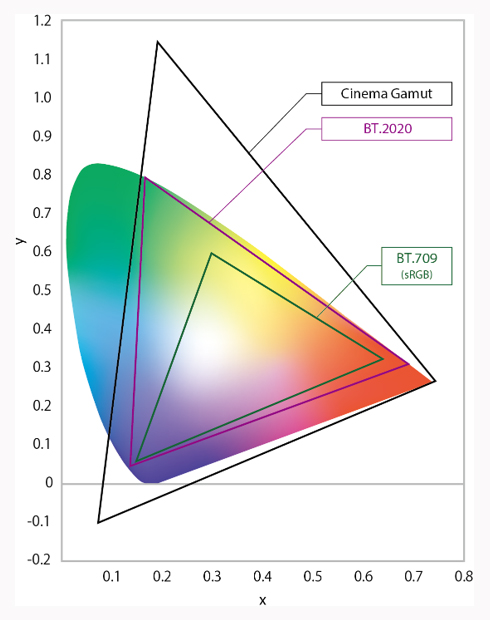
On the EOS R6 Mark III, both Canon Log 2 and 3 are compatible with Cinema Gamut, which has a wider colour space that allows more vivid colour reproduction.
3 Colour modes for different workflows and needs
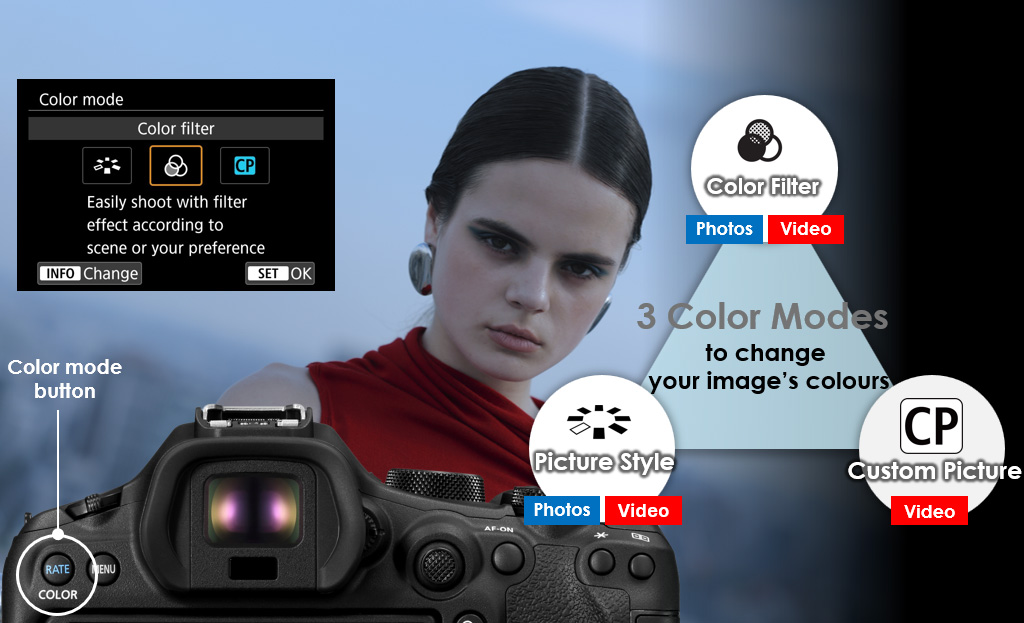
The EOS R6 Mark III has three different Color modes offering different levels of customisability: choose the one that fits your needs and workflow.
1. Picture Style: Easily customisable presets/camera profiles. Changes basic parameters like contrast, sharpness, saturation, and colour tone
2. 14 Color Filters: Gives your footage (and stills) cinematic colours out of the camera. Colours are baked in.
3. Custom Picture mode: Compatible with Cinema EOS. Supports more advanced colour settings and LUT/Look file application, including those imported from Canon’s official LUT Library website.

The Color Filters change the mood of your images. Note: The images used in the above are for illustration only and were not shot on the EOS R6 Mark III.
The freedom to set different recording format combinations
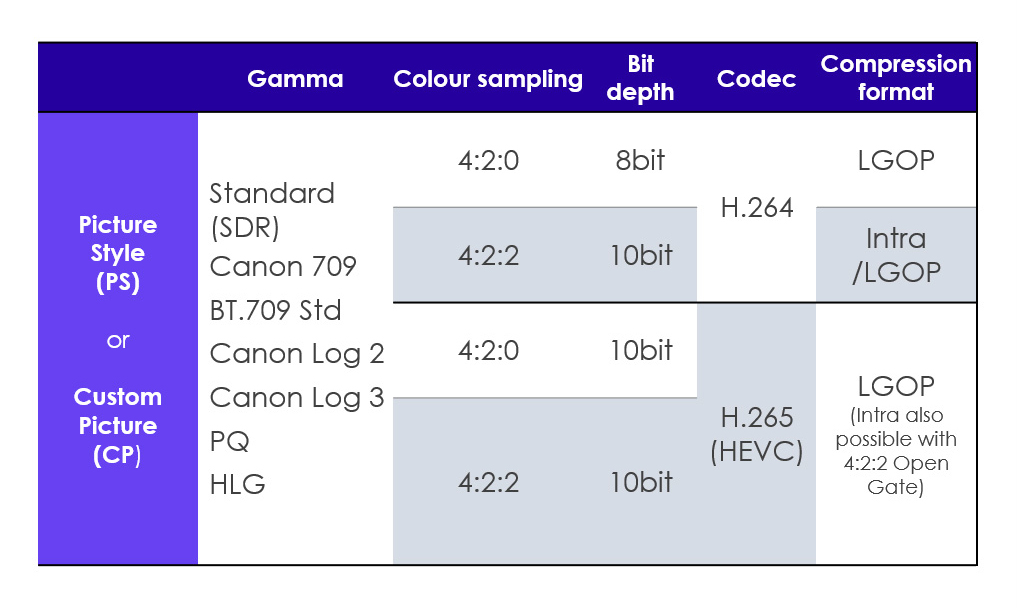
When recording to MP4, the EOS R6 Mark III allows you to flexibly set different combinations of gamma, colour sampling, bit depth, and codec to suit different editing needs and post-processing/delivery environments. 4K, 2K, and Full HD settings and bit rates are the same as the EOS R1/R5 Mark II, simplifying workflows and ensuring better consistency and easier file management when used in a multi-camera production.
8. Other notable video features
HDMI Type-A terminal
A full-sized (Type-A) HDMI output terminal provides better stability and robustness for HDMI connections.
Waveform monitor display
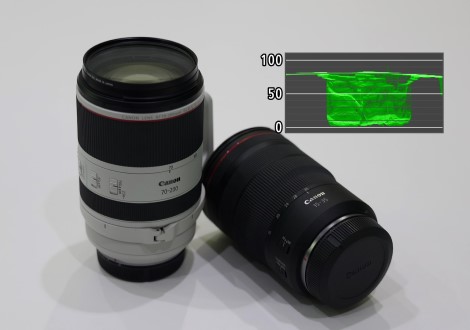
Line and RGB Parade waveform displays are supported, allowing you to check the overall scene brightness level in real time. This is in addition to the existing false colour and zebra displays.
Tally lamp and recording emphasis
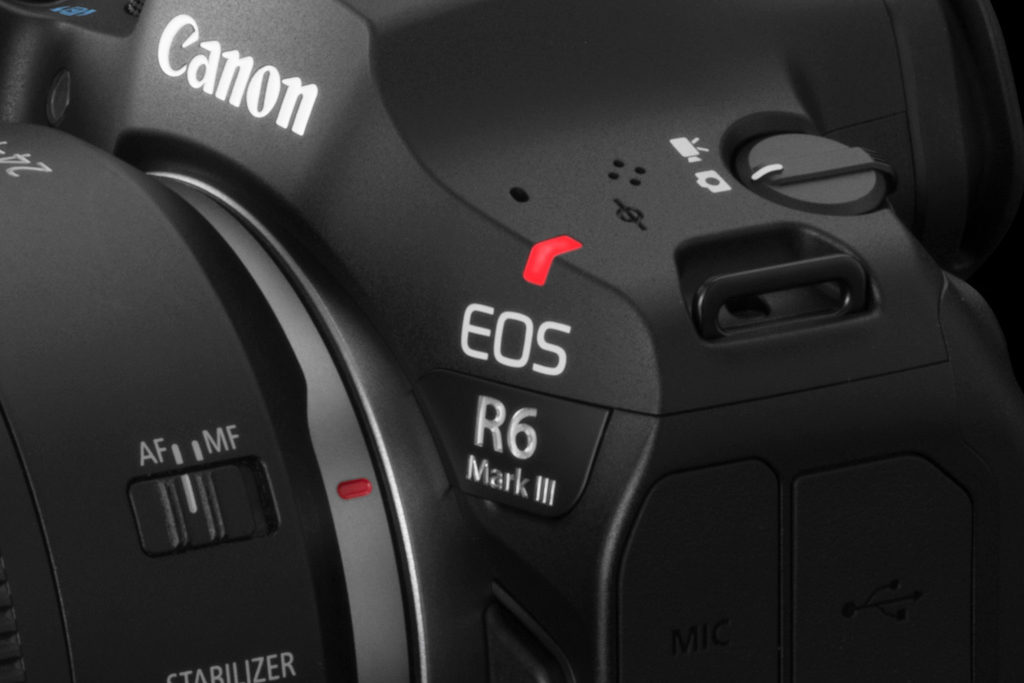
Makes the recording status visible from either side of the camera.
New white balance features
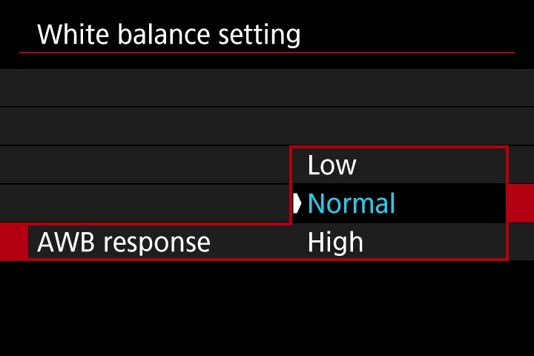
AWB response allows you to set the speed of white balance changes when using auto white balance, while Shockless WB smooths the transitions during manual white balance adjustments. It’s also possible to assign a button to lock AWB to prevent changes when shooting.
XF-AVC S and XF-HEVC S file structure

Like the EOS R1/ R5 Mark II, the EOS R6 Mark III uses the XF-AVC S/XF-HEVC S file system. These support long file names and have a separate folder structure from still photos, allowing workflows not possible with conventional DCF-compliant MP4.
Two livestreaming modes
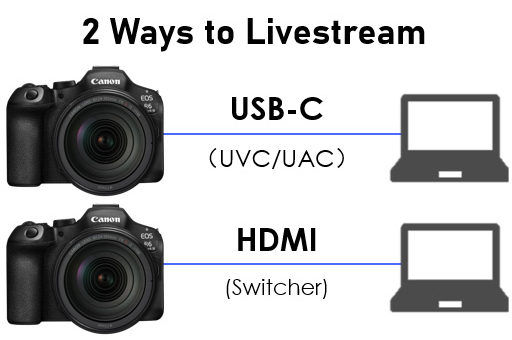
The EOS R6 Mark III supports high-quality livestreaming up to 4K 60p with UVC/UAC support via a single USB-C cable. USB streaming with power supply from the computer is also possible up to Full HD.
For more professional multi-angle live productions with multiple input devices, users can also stream through HDMI with an HDMI switcher.
9. A durable, reliable body with efficient heat management
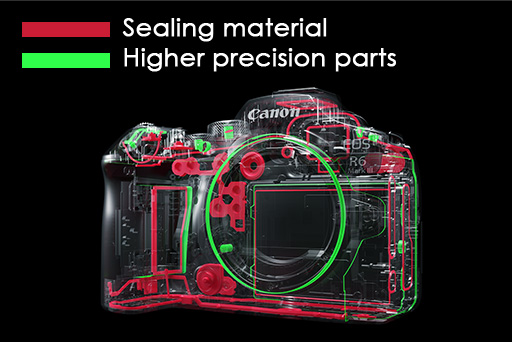
Designed for use out in the field, the EOS R6 Mark III features a dust- and water-resistant performance on par with the EOS R6 Mark II. Sealing materials and precision design in appropriate places prevent sand, water droplets, and other foreign materials from entering the camera, while a shutter mechanism protects the sensor when changing lenses. It has the same durable magnesium alloy chassis as the EOS R6 Mark II.
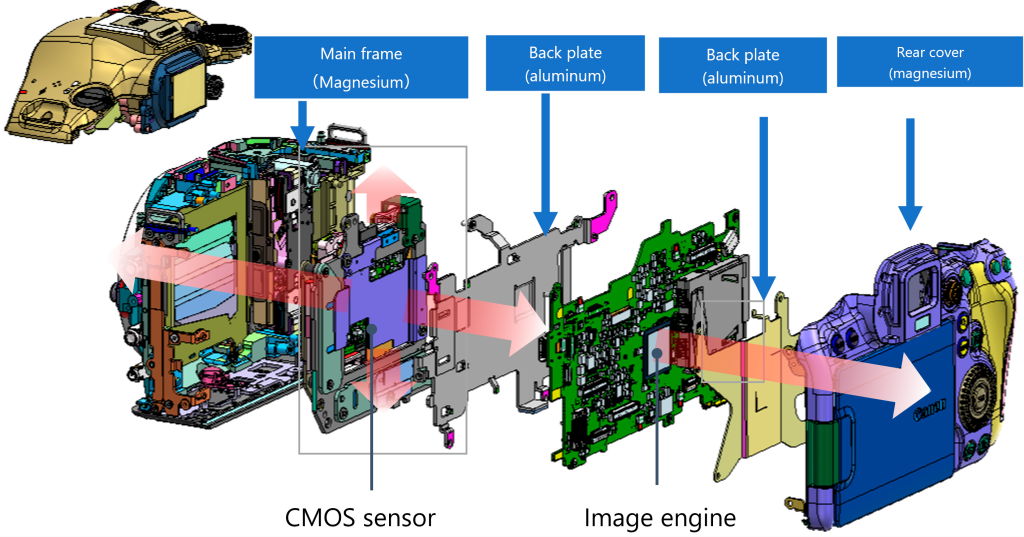
To ensure reliable performance even during 7K RAW video recording, the camera employs a heat dissipation structure that transfers internal heat from the sensor and image processing engine to the outside through graphite sheets. The magnesium alloy chassis and back cover also aid efficient heat dissipation.
Click the button below to learn more about the EOS R6 Mark III

EOS R6 Mark III: Sample images

EOS R6 Mark III/ RF50mm f/1.4L VCM/FL: 50mm/ Aperture-priority AE (f/1.4, 1/3200 sec)/ ISO 100

EOS R6 Mark III/ RF70-200mm f/2.8L IS USM/FL: 81mm/ Manual exposure (f/3.5, 1/1250 sec)/ ISO 125

EOS R6 Mark III/ RF24-105mm f/2.8L IS USM Z/ FL: 24mm/ Manual exposure (f/8, 1 sec)/ ISO 100