















Looking forward to seeing autumn foliage this holiday season? Here are some tips on how you can balance those splendid golden and red trees with the memorable landmarks you’ll inevitably encounter on your trip. Amazing autumn travel photos aside, you might just discover whole new approaches to composing! (Reported by: Yuya Maekado, Digital Camera Magazine)

1. Time of the day: Shoot when the light falls on both subjects
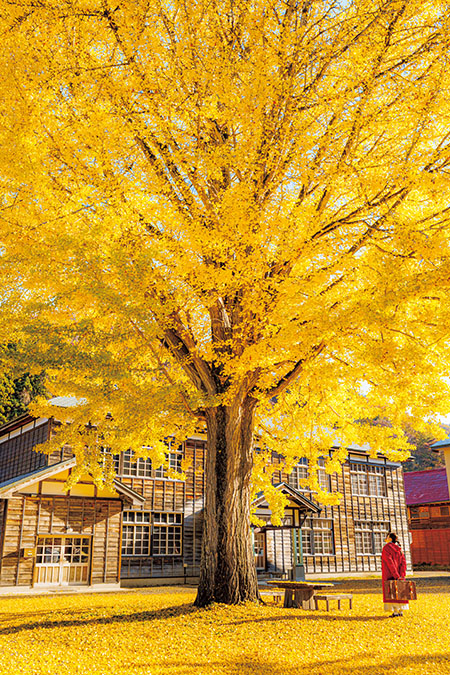
EOS R6/ RF15-35mm f/2.8L IS USM/ FL: 29mm/ Manual exposure (f/9, 1/200 sec)/ ISO 200
- Equal importance = equally bright
- Light direction also affects how the autumn leaves look.
When we want two objects (such as the tree and the building in the above picture) to hold equal importance, it’s easier to get a nice, balanced picture when both objects are equally bright. Try to shoot at a time of the day when the light falls on both the building and the tree(s). Otherwise, the better-lit subject will draw more attention, and the shot will be less balanced.
The lighting angle and quality of light affect how the autumn leaves too: compare the two images below.
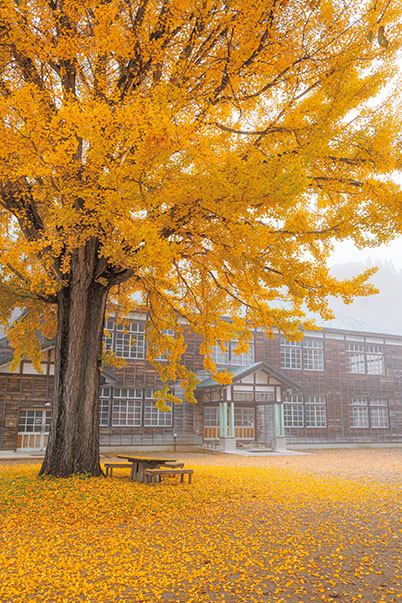
Less balanced
Shot on a cloudy morning
The sunlight didn’t reach the school behind the tree because of the early timing (6am) and cloud cover. The overall image looks flatter and darker. It’s a different aesthetic.
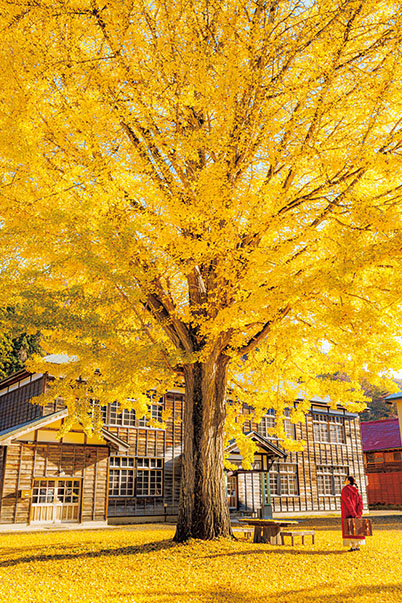
More balanced
Shot on a clear midday afternoon
The sun was higher in the sky, and shone on both the school building and the tree. The lighting angle makes the golden leaves glow.
2. Lens: Use an ultra-wide-angle lens to create leading lines
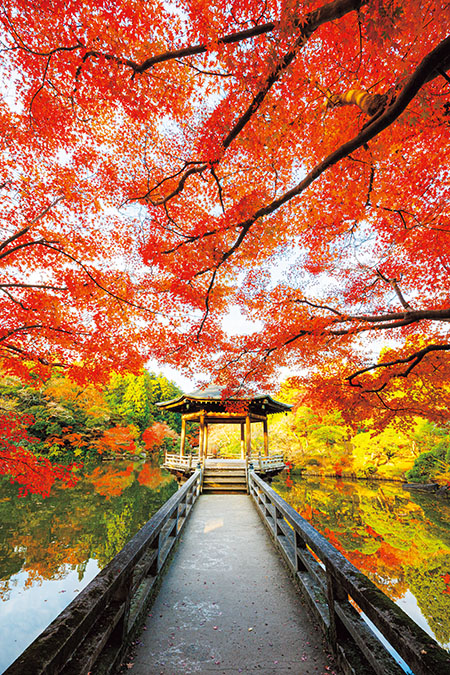
EOS R6/ RF15-35mm f/2.8L IS USM/ FL: 15mm/ Manual exposure (f/10, 1/40 sec)/ ISO 250
Putting a building in the centre of the frame so that it’s surrounded by colourful autumn foliage is a good way to make effective use of the space within the frame while giving the building a stronger presence. You can make the shot even more compelling by adjusting your shooting position so that the path or road leading up to the building forms a long leading line that draws the viewer’s eye towards the back of the scene.
Use an ultra-wide-angle lens for best results: its perspective exaggeration effect will make lines look even longer at the correct angle, enhancing the sense of depth in the image and making the scene feel even more immersive. Pro tip: make sure your shot is level: see Camera Functions that Transform Your Photos Instantly (1): The Basics. Wide-angle perspective distortion makes tilting more visible!
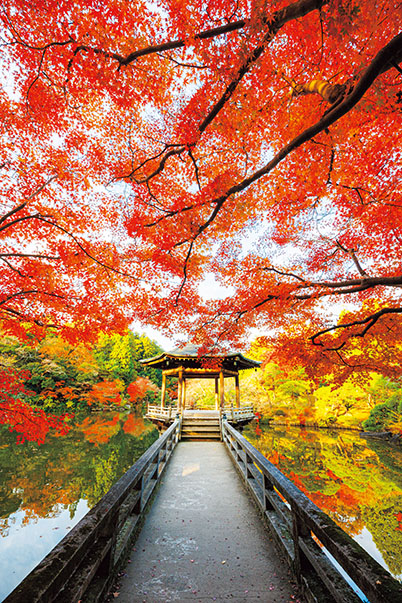
Best results: Shot at 15mm
When I composed this shot, I paid attention to the balance between the autumn leaves and the floating pavilion, as well as how the branches of the trees were pointing. I got the best results at 15mm. The wide-angle perspective effect on the branches and the path guides our eyes towards the floating pavilion.
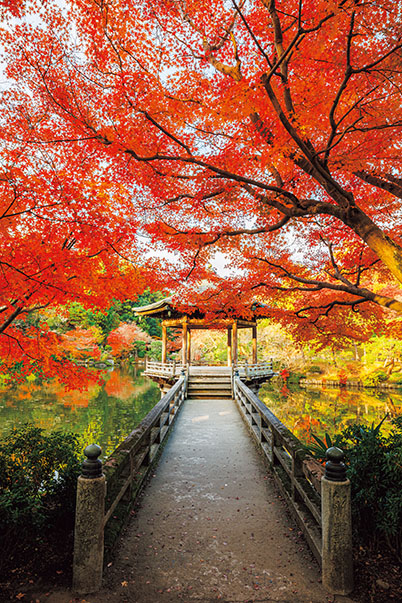
Not so good: Shot at 23mm
I tried to create the same sense of depth with a slightly longer focal length by adjusting my shooting position, but couldn’t achieve the same effect. The autumn leaves block more of the pavilion. Shooting from further back doesn’t guarantee the same results as when you use a wider lens!
3. Composition: Use the autumn foliage to frame the building
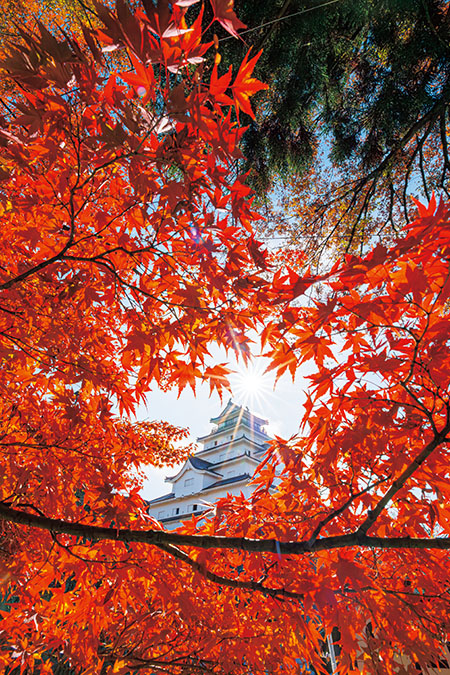
EOS R6/ RF15-35mm f/2.8L IS USM/ FL: 15mm/ Manual exposure (f/16, 1/500 sec)/ ISO 100
You can also compose to surround the building with the autumn leaves. This creates a cohesive composition that not only draws our attention to the building as the main subject, but also gives the autumn foliage a strong sense of presence.
There are a few ways to do it.
Method 1: Foreground framing
One simple way is to use the “frame within a frame” composition:
1. Put the building in the centre of the frame.
2. Look for a shooting spot that allows you to shoot through the autumn leaves so that they surround the building.
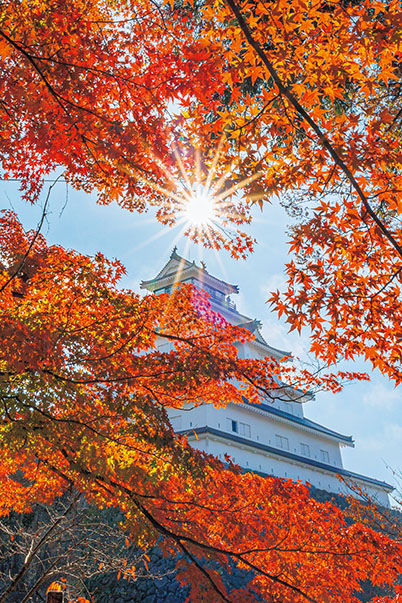
Pro tip: The building will stand out more if it is brighter than the autumn leaves. Consider the light angle and time of the shoot!
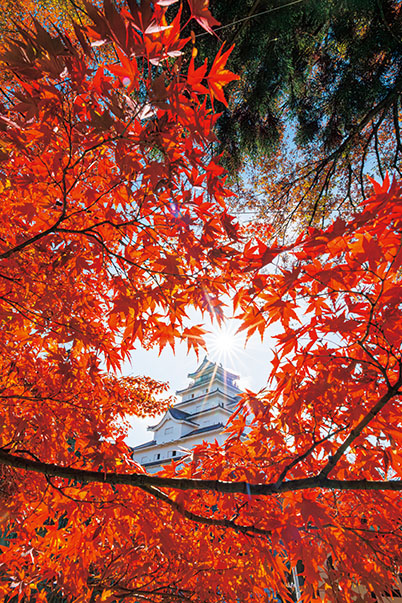
Good shot: “Frame” surrounds the castle
The maple leaves form a frame around the castle and sunburst. Using an ultra-wide-angle lens, I found a camera angle that made the leaf coverage look dense and voluminous.
Not so good: A gap in the “frame”
This was shot a few hours after the previous photo. The sun was higher in the sky—too high to be within the maple leaf “frame”. I tried to adjust my shooting position, but the castle doesn’t look as compelling.
Method 2: Fill the frame with the autumn foliage
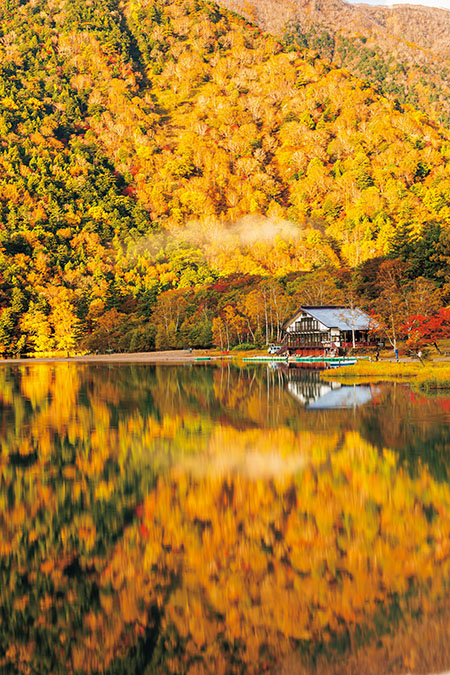
EOS R6/ RF24-105mm f/4L IS USM/ FL: 45mm/ Manual exposure (f/11, 2.5sec)/ ISO 100
The autumn foliage doesn’t necessarily have to be in the foreground. You can also make them surround the building by finding the right angle or making good use of reflections, as I did in the photo above. Use your observation skills and imagination!
Compose so that the building is small in the frame. This transforms it into a focal point that elevates and harmonises with the surrounding autumn colours.
4. Composition: Avoid distracting bright patches
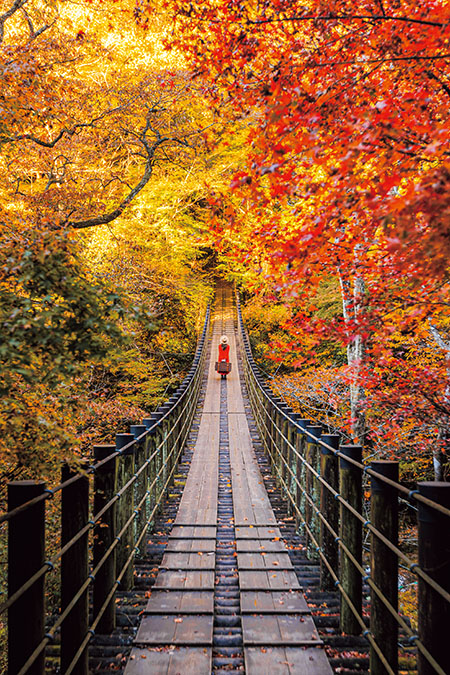
EOS R6/ EF16-35mm f/2.8L II IS USM + EF-EOS R Mount Adapter / FL: 35mm/ Manual exposure (f/4, 1/125 sec)/ ISO 500
Human eyes are drawn to bright areas: your viewers will be distracted by any bright empty spaces such as white sky in in your image. Keep these out of the frame so that your viewers will have nowhere to look but at the architecture and the beautiful autumn colours. Ensure that the branches and leaves overlap so that every inch of white sky is filled with foliage. This might mean adjusting your shooting position or camera angle, or even using a different lens.
No distracting bright patches
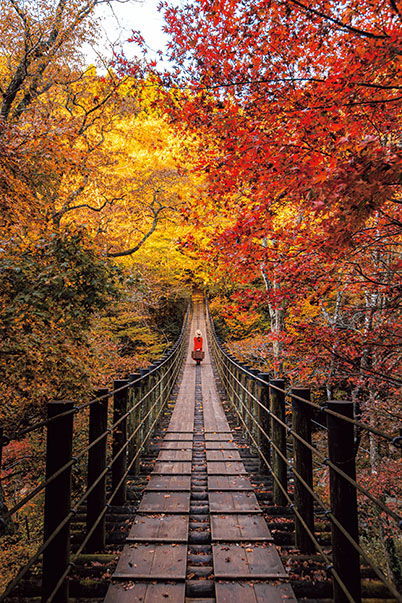
I shot with the camera below eye level to exclude the sky from the frame. This focuses the viewer’s attention on the suspension bridge and autumn leaves.
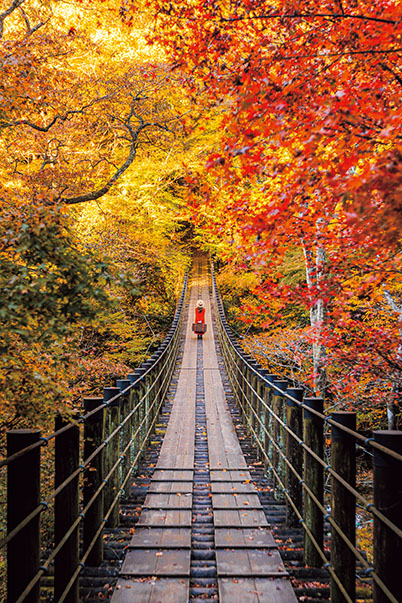
Distracting bright patch
This was shot at eye level. Notice the bright patch of sky at the top left-hand corner: your viewers will probably notice that before anything else in the picture!
Want to expand your composition arsenal? Try these exercises to brush up your composition skills:
Rediscovering Centre Composition: 2 Exercises For Your Next Photowalk
How to Use the Quadrant Technique to Balance Subjects and Scenery
You may also be interested in:
New Landscape Photography Techniques to Try
3 Situational Hacks by Quick-Thinking Photographers
3 Autumn Leaf Spots in Kyoto within Walking Distance
Where to Photograph Autumn Leaves in Japan: 2 Spots Off the Beaten Track
About the Author
A monthly magazine that believes that enjoyment of photography will increase the more one learns about camera functions. It delivers news on the latest cameras and features and regularly introduces various photography techniques.
Published by Impress Corporation


.jpg "trending tips")