









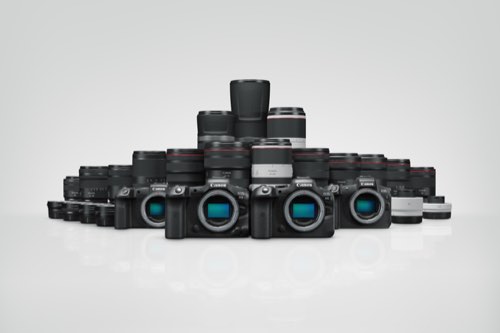


Bright, wide-angle, and compact, the RF16-28mm f/2.8 IS STM expands options for creators looking for an affordable constant aperture wide-angle zoom lens. Maiko Fukui shares her observations. (Reported by Maiko Fukui, Digital Camera Magazine)
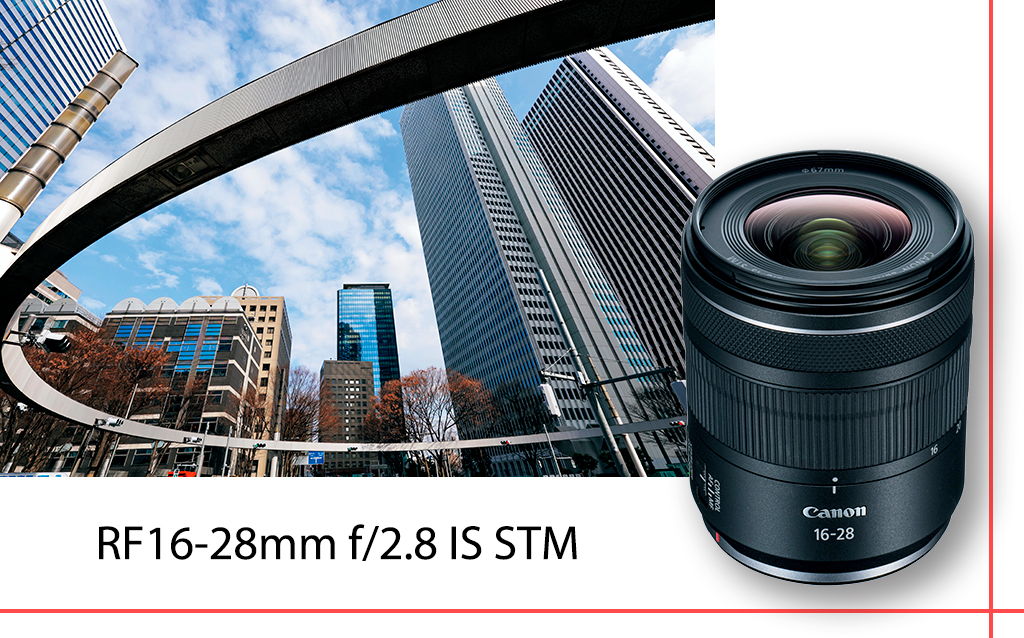
1. It’s extremely portable for a large aperture zoom lens
f/2.8 zoom lenses have a reputation for being large and heavy, more so if they are ultra-wide-angle. However, the small and portable RF16-28mm f/2.8 IS STM departs from the norm.
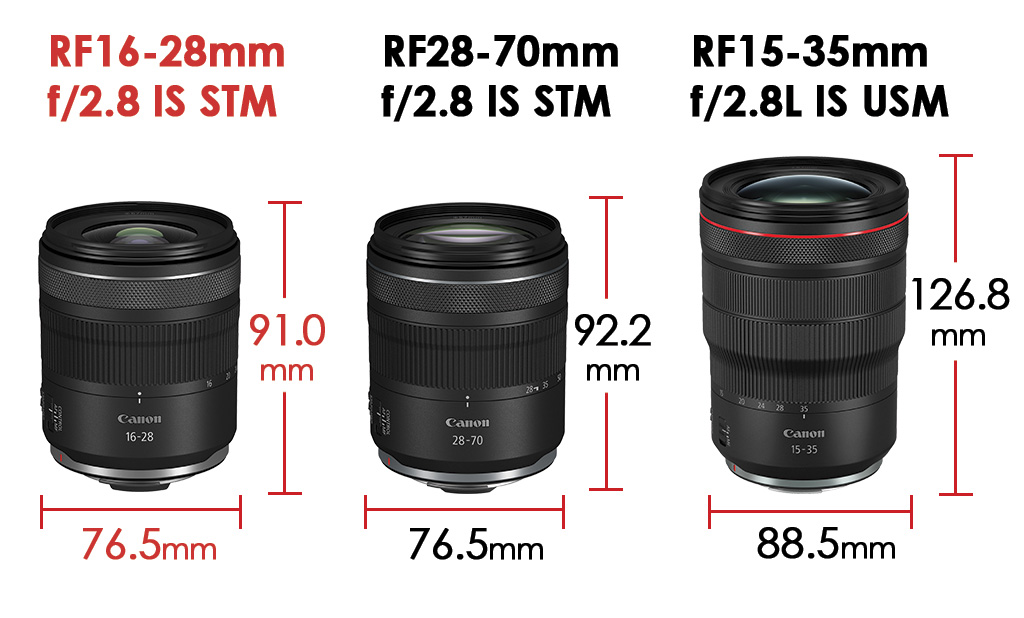
When fully retracted for storage, it is around the same compact size as standard zoom lenses like the RF28-70mm f/2.8 IS STM standard zoom lens and RF24-105mm f/4-7.1 IS STM kit lens. It is also noticeably smaller than the RF15-35mm f/2.8L IS USM, its professional grade counterpart.
It’s small enough to fit into a camera pouch insert, forming a camera-lens combination that I can carry around in my everyday backpack instead of busting out my camera bag.
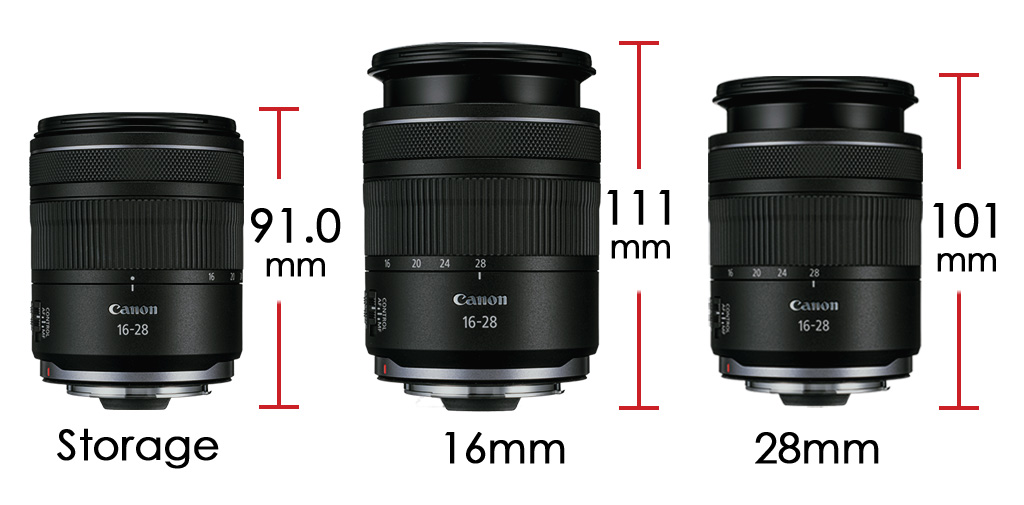
*Barrel lengths during use are as measured.
The lens’ retractable design helps make it more portable. Its total length doesn’t change much even when you extend the lens to use it. The lens is at its longest when shooting at 16mm, but even then, it’s only 2cm longer than its fully retracted state.
Pro tip: Once you have your gear out, keep your lens extended and ready for shooting. This will help you respond faster to unexpected shooting opportunities.
2. Beautiful bokeh, sharp details
The lens creates rich bokeh at its f/2.8 maximum aperture. When I narrowed the aperture to f/8 to achieve a sharper image of a building, the fine details of the building were well resolved.

EOS R6 Mark II/ RF16-28mm f/2.8 IS STM/ FL: 28mm/ Aperture-priority AE (f/2.8, 1/1000 sec, EV+0.3)/ ISO 100/ WB: Auto
A bus stop sign captured at 28mm. The smooth background bokeh creates a simple and clean composition that draws attention to the sign. It also shows how sharp the in-focus area is.
Resolution tests
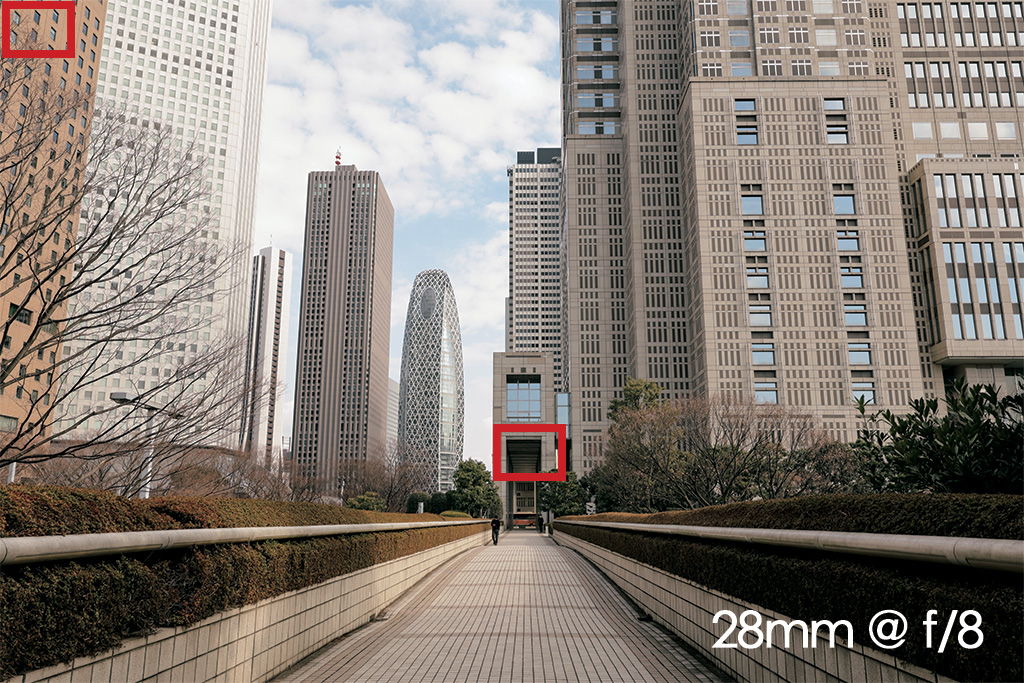
I took the images below to check the image quality at the lens’ wide and tele ends.
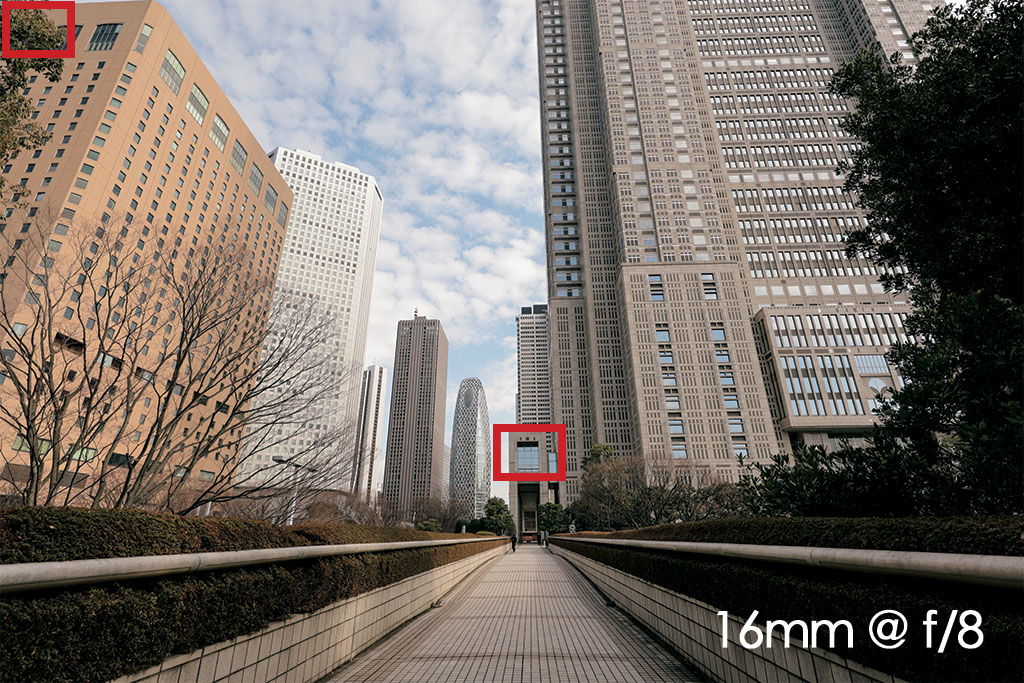
Corner
Centre
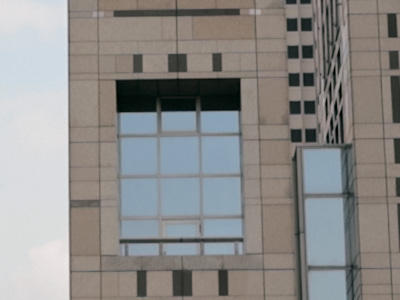
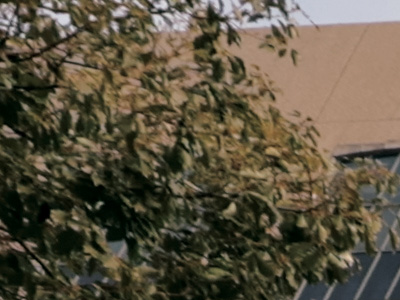
The 16mm image shows some colour bleeding in the corners. Other than that, image quality is satisfactory with no visible distortion or softness of detail.
Corner
Centre
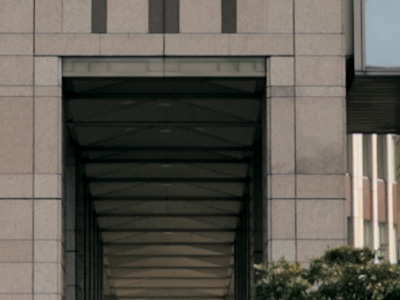
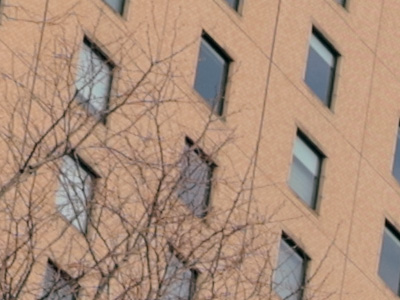
The 28mm image is clean and clear from the centre to the corners. This level of imaging quality is more than adequate for a lens so compact.
3. So many wide angle possibilities!
As an ultra-wide-angle zoom lens, it goes without saying that the RF16-28mm f/2.8 IS STM has a huge angle of view that can capture a large area of the scene. This is especially useful in tight spaces, as you also get to enjoy the unique perspective and distortion effects and the possibilities that they bring!
Apart from the usual natural landscapes and architecture, an ultra-wide-angle lens can put an interesting spin on street and urban photography too. For this article, I took it to some of my usual walkaround places, hoping to capture sights and stories different from what I usually see.
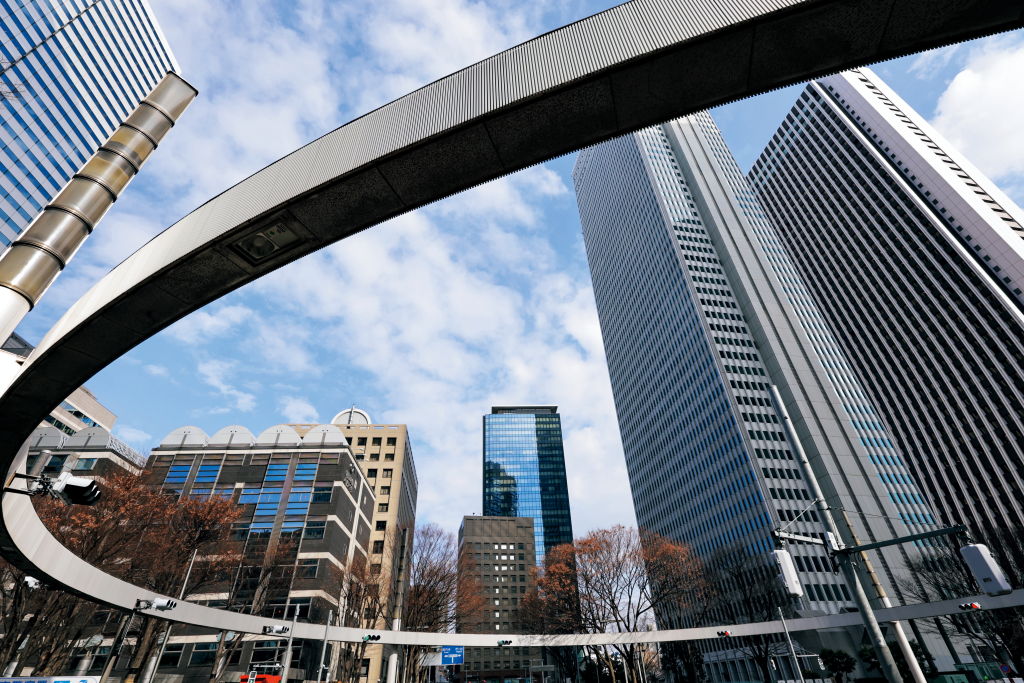
EOS R6 Mark II/ RF16-28mm f/2.8 IS STM/ FL: 16mm/ Aperture-priority AE (f/8, 1/500 sec, EV0)/ ISO 250/ WB: Auto
Using the unique ultra-wide-angle lens perspective, I made this circular structure the main subject of this composition. The 16mm angle of view was perfect for presenting a familiar place from a different angle! I stopped down to f/8 to keep the details sharp all the way to the corners.
At 16mm
Shooting at 16mm unravels a world completely different from what you see with your bare eyes. I had a lot of fun looking at familiar scenes from different angles. The wide-angle perspective exaggeration effect is most obvious in scenes with straight lines, so I would encourage users to experiment and see how different shooting positions and angles change perspective, and with it, the picture.
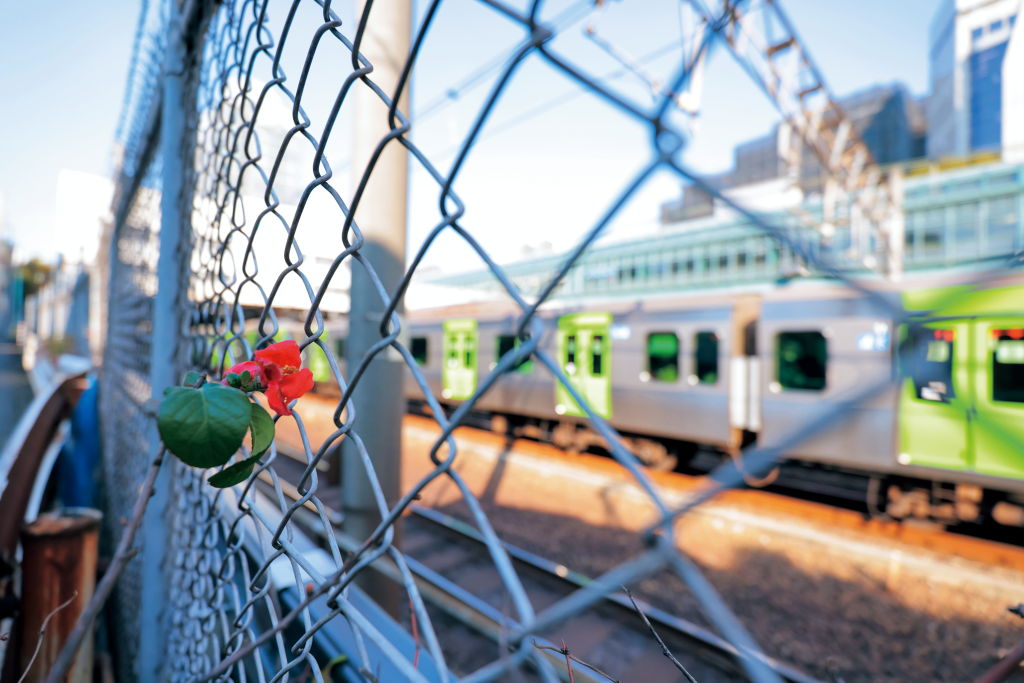
EOS R6 Mark II/ RF16-28mm f/2.8 IS STM/ FL: 16mm/ Aperture-priority AE (f/2.8, 1/1250 sec, EV+1.0)/ ISO 400/ WB: Auto
This flower by the fence looks as though it’s watching the trains, doesn’t it? To maximise the lens’ ultra-wide-angle perspective at 16mm, I shot the fence from the side, which enhances the sense of depth. The f/2.8 maximum aperture creates creamy bokeh both in the foreground and background.
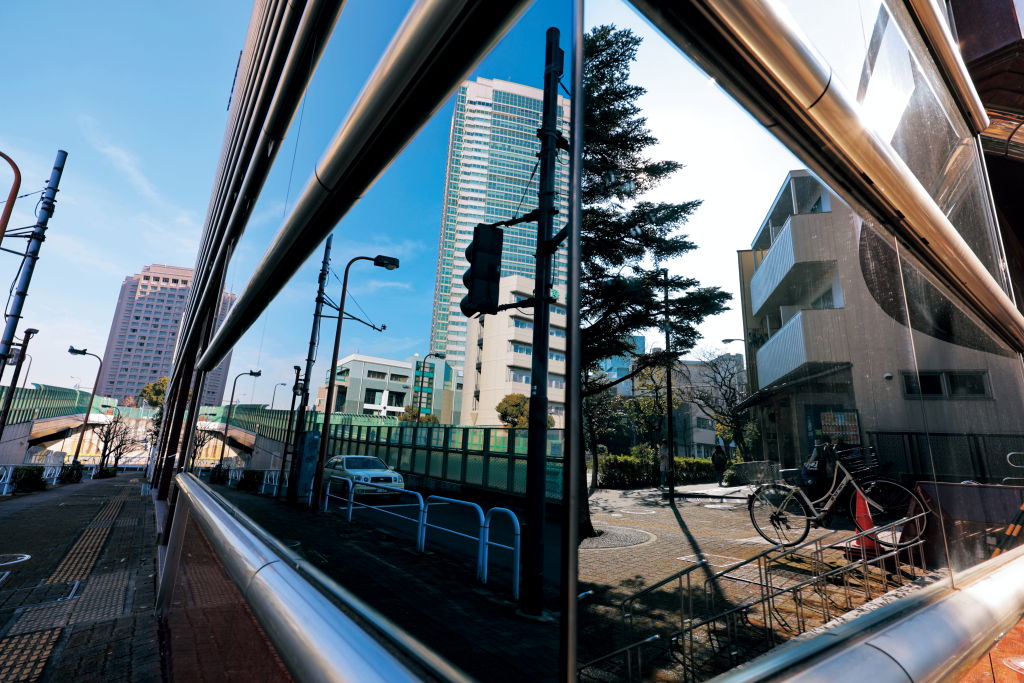
EOS R6 Mark II/ RF16-28mm f/2.8 IS STM/ FL: 16mm/ Aperture-priority AE (f/5.6, 1/200 sec, EV+0.3)/ ISO 100/ WB: Auto
The scenes reflected in the glass panels are like parallel worlds. I tried different shooting heights and positions, seeking to create an image that draws attention to both the interesting shapes and the sense of perspective. Stopping down to f/5.6 kept the overall sharpness.
At 28mm
While 28mm is still considered wide angle, its perspective exaggeration is less obvious. You can use it like you would a standard (normal) lens. In fact, 28mm is one of the classic focal lengths for street photography.
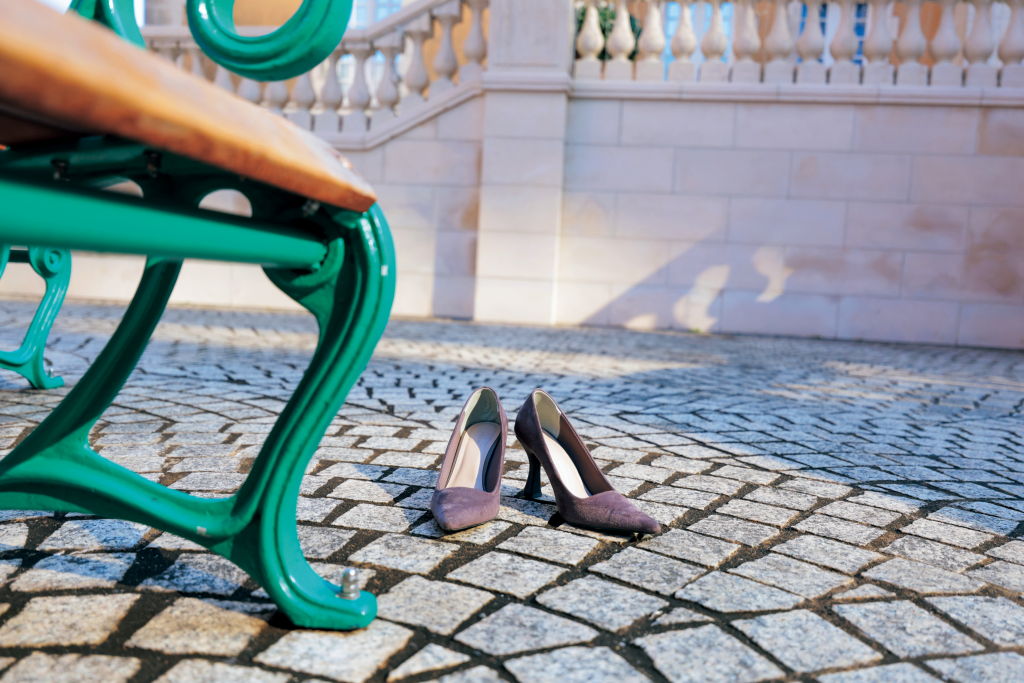
EOS R6 Mark II/ RF16-28mm f/2.8 IS STM/ FL: 28mm/ Aperture-priority AE (f/2.8, 1/1250 sec, EV+1.0)/ ISO 400/ WB: Auto
I chanced upon this pair of high heels, taken off and left next to a street bench for some unknown reason. Zooming in to 28mm to avoid obvious perspective distortion, I found a composition that conveyed the situation. I opened up the aperture to f/2.8 to blur out the background.
On top of that, the RF16-28mm f/2.8 IS STM has a “hidden talent”: its 20cm closest focusing distance at 28mm, which allows you to easily photograph food on a table without moving much from your seat.
I believe you’ll fully feel the benefits of lens’ zoom range when you travel or go on walkarounds, and want to preserve memories of the sights, sounds, and tastes you encounter.
Pro tips
- 16mm will also give you portraits with the long-leg effect.
- With the huge coverage of wide-angle lenses, you’re likely to end up with unwanted elements in the frame if you aren’t careful. Check your image thoroughly.
Other observations to note
- Autofocus was decently fast and accurate.
- The lens’ large f/2.8 aperture and built-in optical image stabilisation of up to 5.5 stops were reassuring to have when shooting in dark places.
In summary
I would certainly recommend the RF16-28mm f/2.8 IS STM to those looking for a wide-angle lens they can carry around anywhere, any time.
Learn techniques for maximising this lens in:
Lens Basics #6: Wide-angle Lenses
Master Your f/2.8 Zoom Lens (1): Highlighting a Subject
Master Your f/2.8 Zoom Lens (2): Creating Depth & Dimensionality
Master Your f/2.8 Zoom Lens (3): Try Astrophotography
Master Your f/2.8 Zoom Lens (4): Low Light Landscape Photography
About the Author
A monthly magazine that believes that enjoyment of photography will increase the more one learns about camera functions. It delivers news on the latest cameras and features and regularly introduces various photography techniques.
Published by Impress Corporation
Osaka-born and Tokyo-based, Maiko Fukui was formerly a student of photographer-cinematographer Hideto Uchiike. She is now an editorial and commercial photographer specialising in people and celebrity portraiture, travel, and lifestyle photography. With tiny everyday emotions as her seeds of inspiration, she aims to capture moments that sparkle while preserving their energy and atmosphere.
Instagram
@caby_maiko